Action

PSY 511.001 Spr 2026

Rick Gilmore

Department of Psychology

Overview

Prelude

Reviews (2012)

Announcements

Today’s topics

  • Warm-up
  • On action
  • How muscles work
  • Controlling muscles
  • Illustrative motor systems

Warm-up

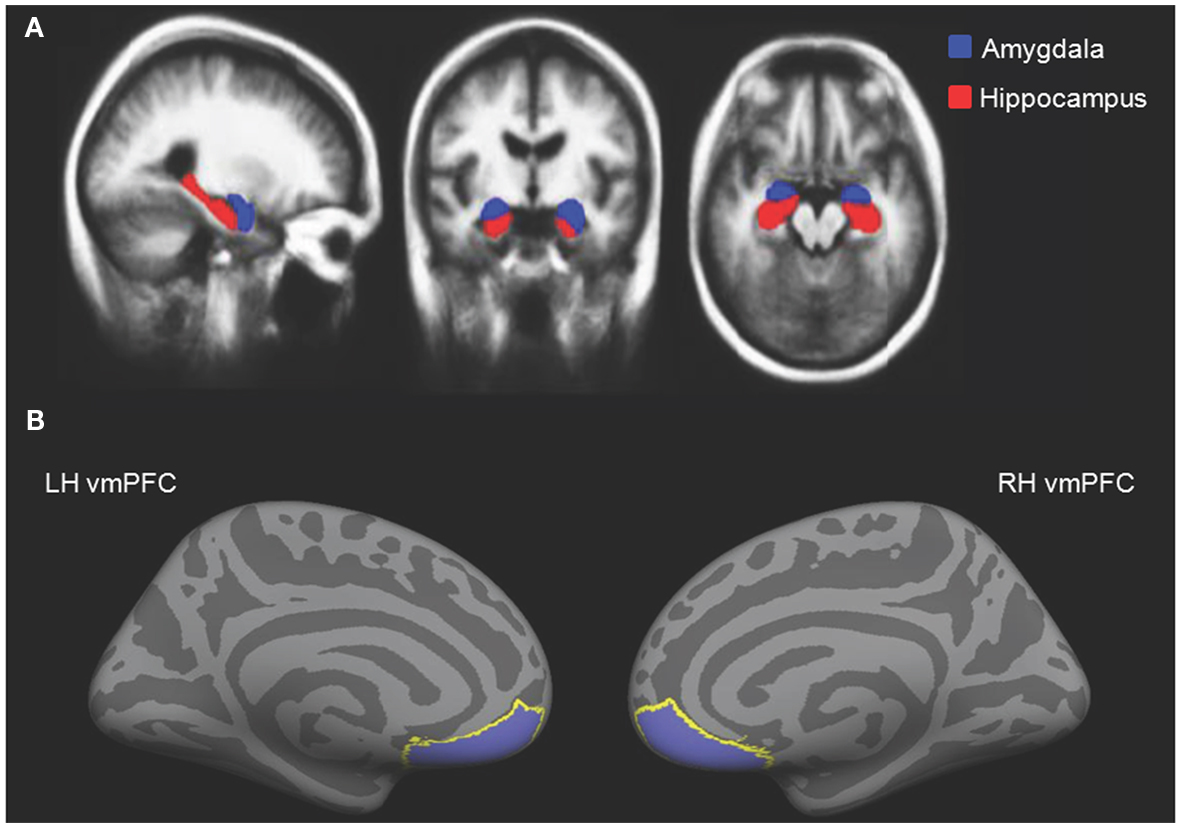
The amygdala is found deep within which lobe of the cerebral cortex?

  • A. The occipital lobe
  • B. The frontal lobe
  • C. The insula
  • D. The temporal lobe

The amygdala is found deep within which lobe of the cerebral cortex?

  • A. The occipital lobe
  • B. The frontal lobe
  • C. The insula
  • D. The temporal lobe

Cassidy2012-ue Figure 2

Cassidy2012-ue Figure 2

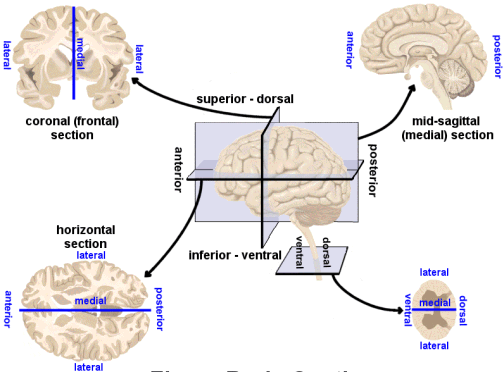
The middle image in A in the figure at right depicts what plane of section?

  • A. Sagittal
  • B. Dorsal
  • C. Coronal
  • D. Horizontal

Cassidy & Gutchess (2012) Figure 2

Cassidy & Gutchess (2012) Figure 2

The middle image in A in the figure at right depicts what plane of section?

  • A. Sagittal
  • B. Dorsal
  • C. Coronal
  • D. Horizontal

Cassidy & Gutchess (2012) Figure 2

Cassidy & Gutchess (2012) Figure 2

Planes of section from http://www.scienceteacherprogram.org/

Planes of section from http://www.scienceteacherprogram.org/

Which division of the peripheral nervous system (PNS) ennervates the gastrointestinal tract?

  • A. Enteric
  • B. Cerebellum
  • C. Sympathetic
  • D. Parasympathetic

Which division of the peripheral nervous system (PNS) ennervates the gastrointestinal tract?

  • A. Enteric
  • B. Cerebellum
  • C. Sympathetic
  • D. Parasympathetic

On action

Why action?

The way to do is to be.

– Laozi (老子), Chinese philosopher

The way to be is to do.

– Dale Carnegie
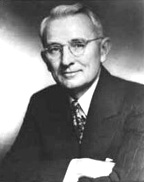
“Quote origin” (n.d.)

Do be, do be, do.

– Frank Sinatra

“Quote origin” (n.d.)

Animals are animate

  • Actions influence
    • Their own bodies, \(B\)
      • The external world, \(W\)
  • The nervous system controls the body and its effects on the world

flowchart TD
  N[Nervous System] --> B[Body]
  B --> W[World]

Laws govern movement

  • Physics
  • Biology
  • Psychology

Your turn

Can you name a physical law that applies to movement? A biological law? A psychological law?

Suggestion: Fitts’ (1954) Law: Speed/accuracy trade-off

Movement one of nervous system outputs

  • Somatic
  • Autonomic
  • Endocrine
flowchart TD
  N[Nervous System] -- autonomic --> B[Body];
  N -- somatic --> B;
  N -- endocrine --> B;
Figure 1: Three classes of outputs from the nervous system.

Inputs

  • Exteroceptive (outside the body)
  • Interoceptive
flowchart TD
  B[Body] -->|interoception| N[Nervous System] 
  B -->|exteroception| N
Figure 2: Two broad classes of inputs from the body (interoception) and the world (exteroception) to the nervous system.

flowchart TD
  N[Nervous System] -- autonomic --> B[Body]
  N -- somatic --> B
  N --->|endocrine| B
  B --->|endocrine| N
  B --->|action| W[World]
  W --->|perception| B
  B --->|somatic| N
  B --->|autonomic| N
Figure 3: Schematic of information flows into and out of the nervous system. Note: This figure ignores flows specifically related to metabolism, like changes in blood oxygen.

Computational perspective

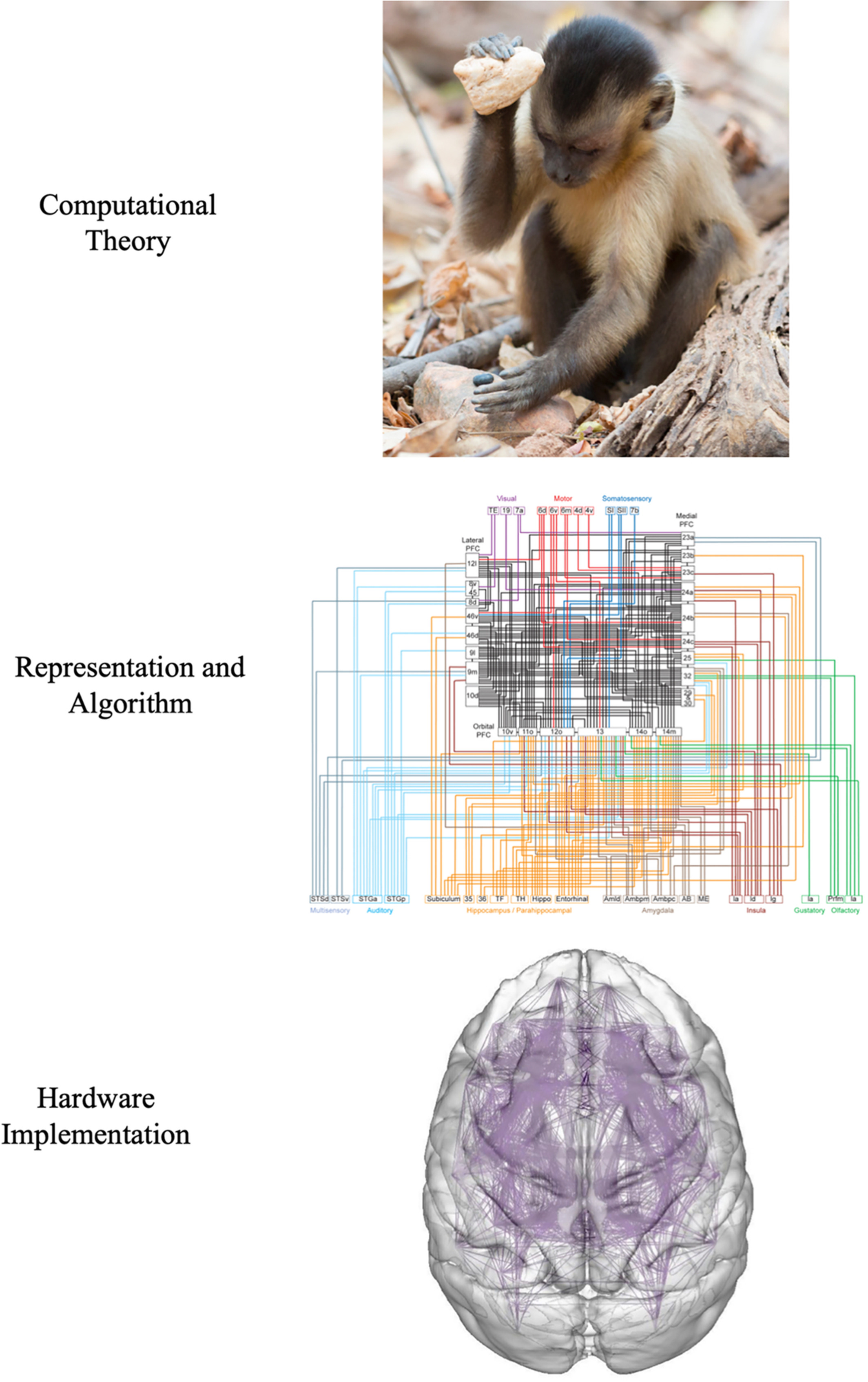
Favela (2020) Figure 3

Favela (2020) Figure 3

Neuromechanics perspective

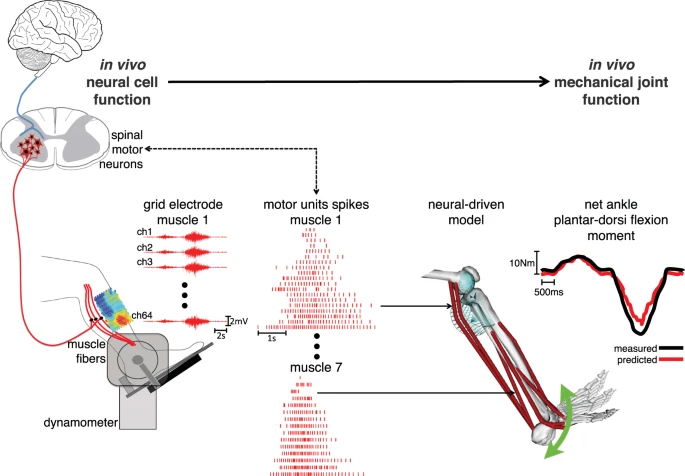
Sartori, Yavuz, & Farina (2017) Figure 1

Sartori et al. (2017) Figure 11

Evolutionary perspective

  • What actions must animals perform?

giphy.com

giphy.com

Evolutionary perspective

  • Live long enough…
    • Avoid injury & predation
    • Secure sustenance
    • Maintain health
  • Reproduce…
    • Find a mate
    • Mate
    • Ensure the well-being of offspring

Classes of behavior

  • Orienting, info gathering
  • Maintaining balance
  • Reaching, grasping, & manipulation
  • Locomotion
  • Communication
  • Mating & caregiving
  • Ingestion & elimination
  • Defense
  • Sleep

Your turn

What’s missing?

The real reason for brains

Wolpert (2011)

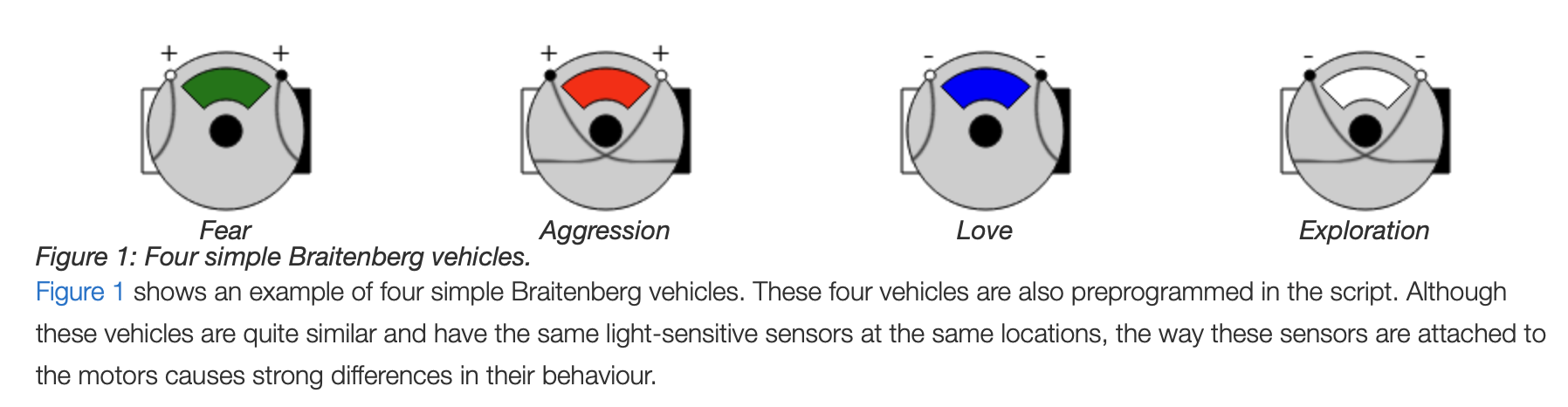
But simple circuits…

Braitenberg (2021)

Braitenberg (2021)

Harmen de Weerd (n.d.)

Harmen de Weerd (n.d.)

Even single cells…

Totally Science (2021)

Engines of animal motion

Wikipedia

Wikipedia2

Wikipedia

Wikipedia3

How muscles work

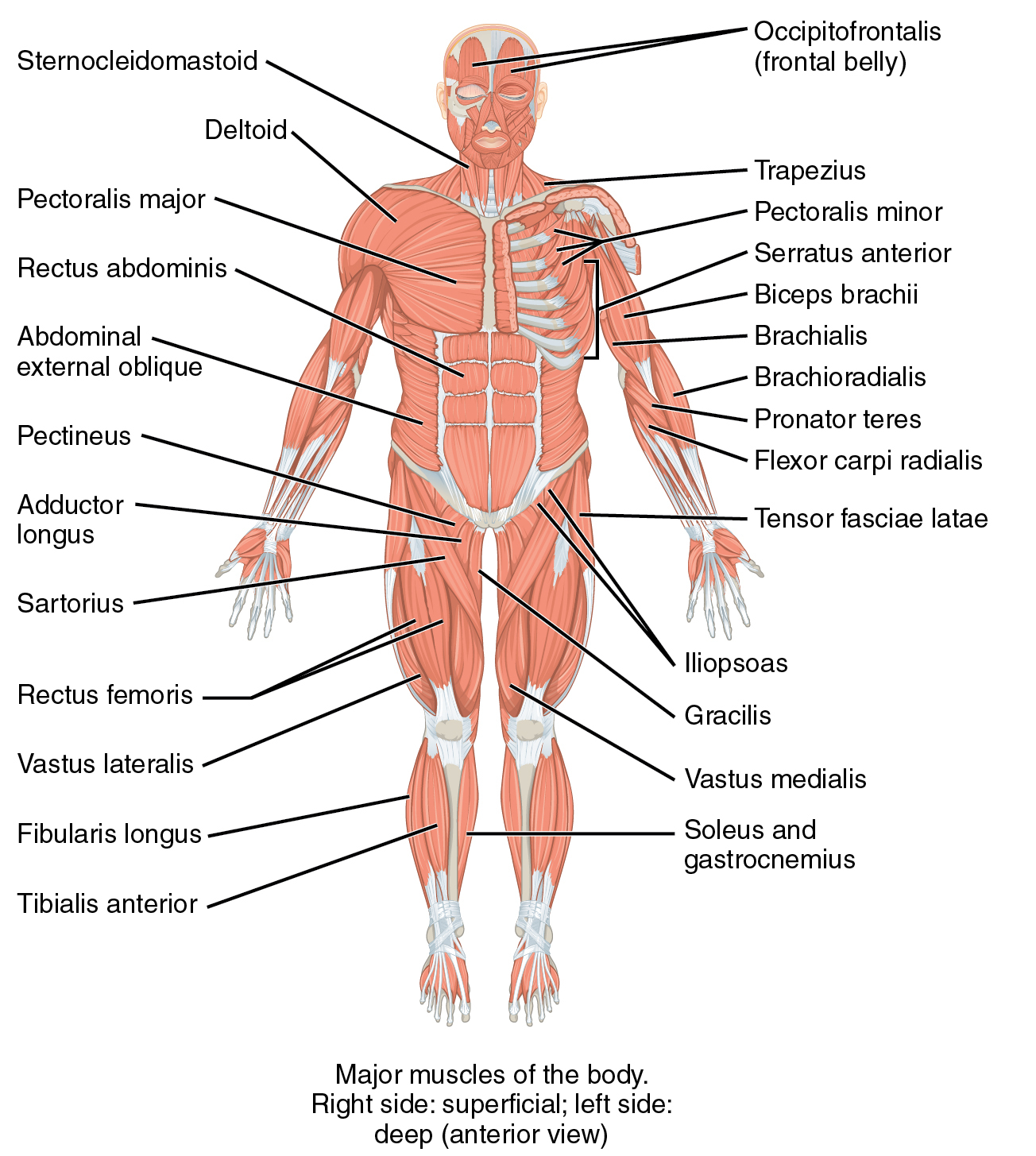
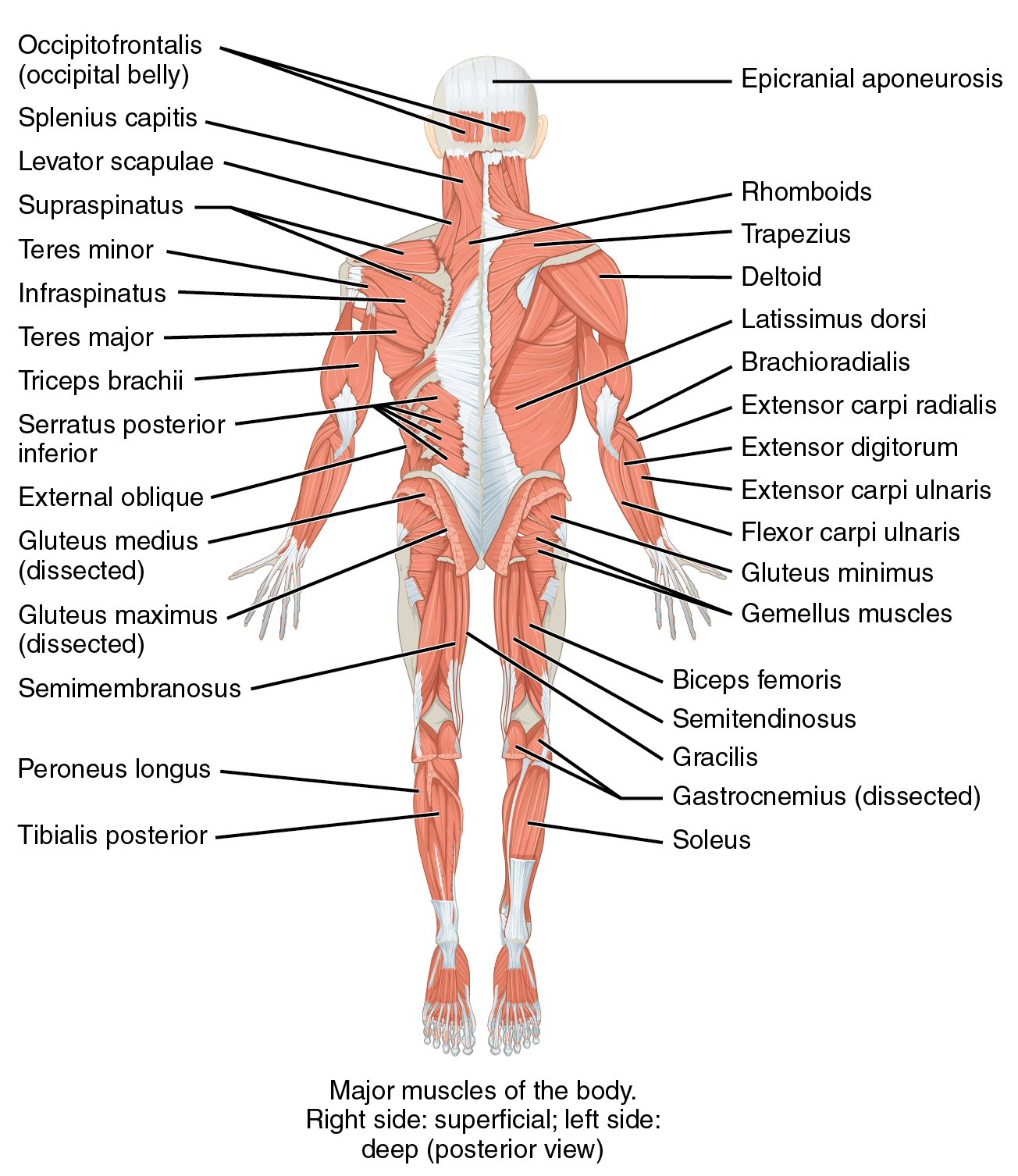
Muscles are machines that

  • Generate force…in one direction
  • Involuntary
    • Cardiac & smooth
  • Voluntary
    • Striated
    • Skeletal

Functional classes

  • Axial
    • Trunk, neck, hips
  • Proximal
    • Shoulder/elbow, pelvis/knee
  • Distal
    • Hands/fingers, feet/toes

Agonist/antagonist pairs

CNS must…

  1. Generate signals that move axial, proximal, & distal muscles in coordination.

  2. Generate signals that move agonist/antagonist muscle pairs in sequence.

How skeletal muscles contract

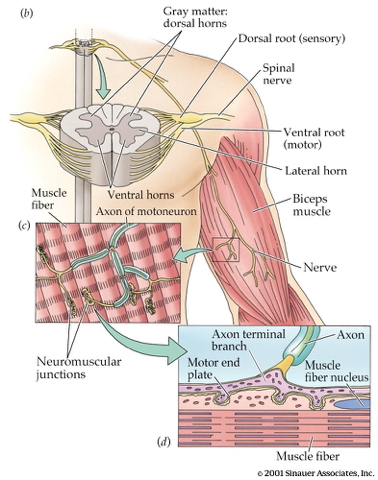
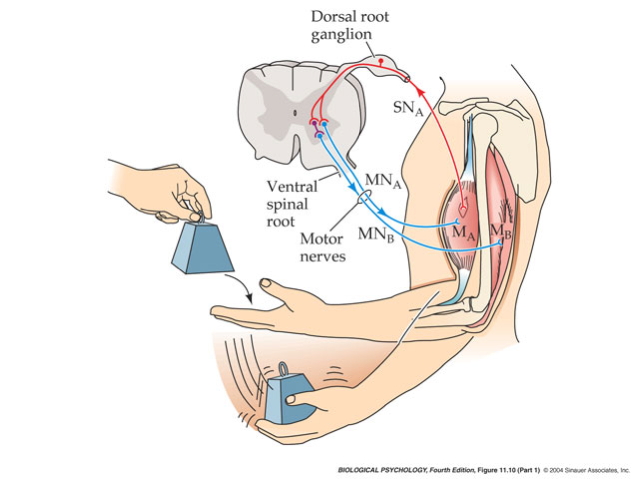
  • Motor neurons (cell bodies located in ventral horn of spinal cord)
  • Project to muscle fiber(s)
    • Motor unit == Motor neuron + muscle fibers
    • ~10-1,000 muscle fibers/unit

Wikipedia

Wikipedia

How skeletal muscles contract

  • Neuromuscular junction
    • Synapse between motor neuron and muscle fiber
    • Motor neuron axon releases acetylcholine (ACh)
  • Muscle fiber contracts

Biological Psychology 4th ed.

Biological Psychology 4th ed.

Generating force

  • More force
    • \(\rightarrow\) faster stimulation rate
    • Recruit (activate) more motor units

Fiber types

  • Fast twitch/fatiguing
    • Type II4
    • White meat
  • Slow twitch/fatiguing
    • Type I
    • Red meat

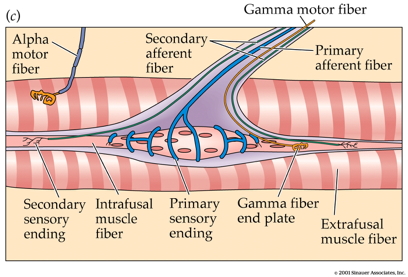
Muscles are sensory organs, too!

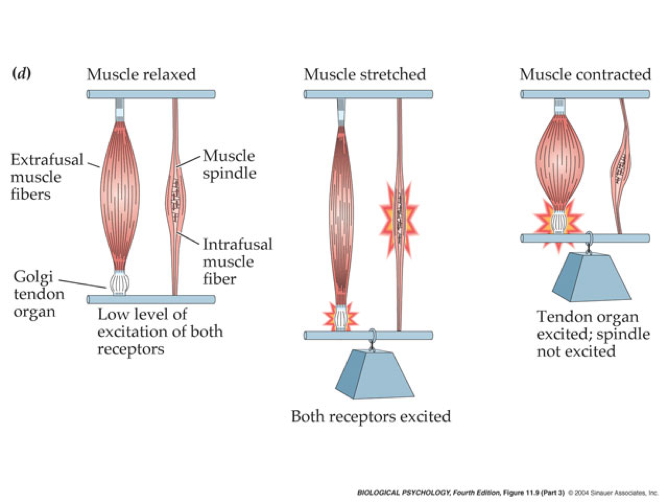
  • Extrafusal fibers
    • Generate force
  • Intrafusal fibers
    • Contain stretch receptors
    • Sense muscle length/tension

Stretch receptors

  • Sense muscle length \(l\) and \(\Delta l\), e.g. “stretch”
  • Muscle proprioception
  • Proprioception == perception about the self
    • A form of interoception

Intrafusal fiber connections

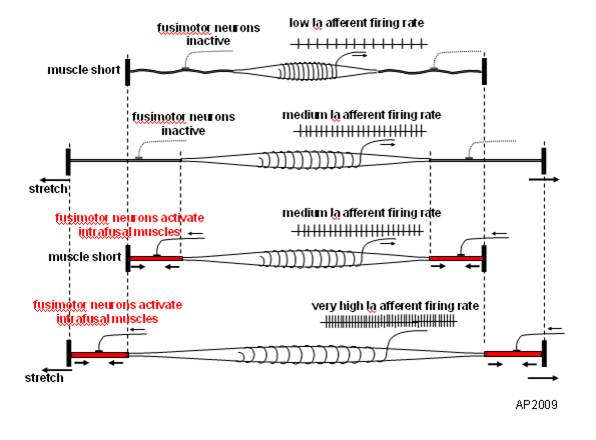
  • Type Ia afferents5
    • Info about length \(l\) and \(\Delta l\)
    • Via stretch receptors (aka muscle spindles)
  • Type II afferents
    • Info about length \(l\) only
  • Force-producing motor fiber (efferent)
    • Motor input
    • Ennervated by gamma (\(\gamma\)) motor neurons

Extrafusal fibers

  • Generate force
  • Ennervated by alpha (\(\alpha\)) motor neurons

Skeletal muscle circuit

flowchart TD
  N{Nervous System} ==>|Alpha motor neurons|B(Extrafusal muscle fibers)
  N ==>|Gamma motor neurons|C(Intrafusal muscle fibers)
  C ==>|Type Ia afferents|N
  C ==>|Type II afferents|N
Figure 4: CNS activation of extrafusal and intrafusal skeletal muscle fibers.

Monosynaptic myotatic stretch reflex

  • Muscle stretched (length increases)
  • Muscle spindle in intrafusal fiber activates
  • Ia fiber \(\rightarrow\) spinal cord
    • Activates alpha (\(\alpha\)) motor neuron
    • 1 synapse \(\rightarrow\) monosynaptic
  • \(\alpha\) motor neuron activates extrafusal fiber
  • Muscle contracts, shortens length

Source: Wikipedia

Source: Wikipedia
  • Gamma (\(\gamma\)) motor neuron fires to take up ‘slack’ in intrafusal fiber
Suppressing tremor

  • Polysynaptic inhibition of antagonist muscle

  • Prevents/dampens tremor

  • Brain gets fast(est) sensory info from spindles

Why it matters…

Also: Patellar reflex

牛津基礎生物學 (2021)

Conduction speed

  • \(\alpha\) motor neuron ~ 50-60 m/s
  • Ia afferents ~ 80-120 m/s
  • Brain to toe or toe to brain: 15-30 ms
  • Wikipedia contributors (2025a)

Wikipedia contributors (2025a)

Wikipedia contributors (2025a)

Interim summary

  • Voluntary movements involve motor units causing contraction of agonist or antagonist pairs of skeletal muscles
  • Skeletal muscles have embedded sensors that detect length/tension
  • CNS gets rapid6 feedback about muscle length/tension (proprioception)
  • Monosynaptic stretch reflexes maintain stability of limb/body position

Controlling muscles

Kan (n.d.)

Kan (n.d.)

Key nodes

  • Primary motor cortex (M1)
    • Anterior to central sulcus
    • Frontal lobe

Wikipedia

Wikipedia7

Somatotopic8 organization

Wikipedia

Wikipedia9

Key nodes

  • Non-primary motor cortex
    • Supplementary motor area (SMA)
    • Premotor cortex (PMC)
    • Frontal eye fields (FEF)

Wikipedia

Wikipedia10

Key nodes

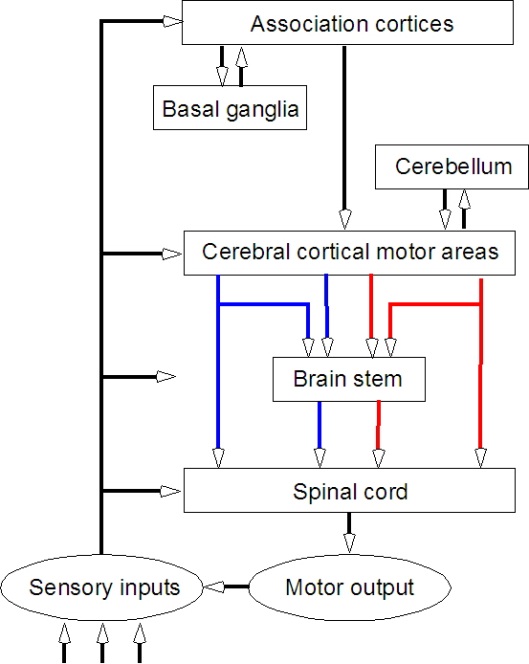
  • Basal ganglia
  • Brain stem
  • Cerebellum
  • Spinal cord

Kan (n.d.)

Kan (n.d.)

Projection pathways

  • Pyramidal tracts/system
  • Extrapyramidal system

Pyramidal tracts/system

Wikipedia

Wikipedia11

Pyramidal tracts/system

  • Pyramidal cells
    • Layer 5 in primary motor cortex (M1)
  • Corticobulbar (cortex -> brainstem) tract
  • Corticospinal (cortex -> spinal cord) tract

Wikipedia

Wikipedia12

Pyramidal tracts/system

  • Crossover (decussate) in medulla
    • L side of brain ennervates R side of body
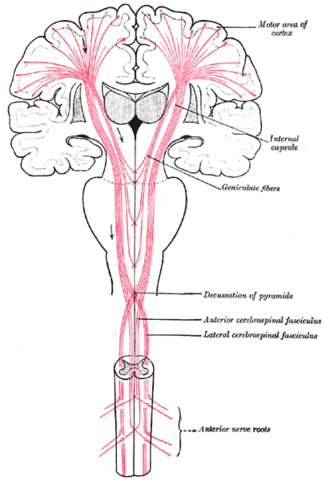
Source: Wikipedia

Source: Wikipedia

Spinal cord projections

  • Separate ascending (afferent) and descending (efferent) pathways
  • Ascending (generally) more dorsal; descending more ventral
  • White matter on exterior (unlike cerebral cortex)

Wikipedia

Wikipedia13

Somatotopic map & spinal cord segments

Wikipedia

Wikipedia14

Dermatomes & myotomes

Wikipedia

Wikipedia15

Direct cortical control

  • Over some motor neurons
  • In humans; prevalence uncertain in other animals
  • For individuated (“fractionated”) movements of fingers, toes, lips, but other muscles, too.

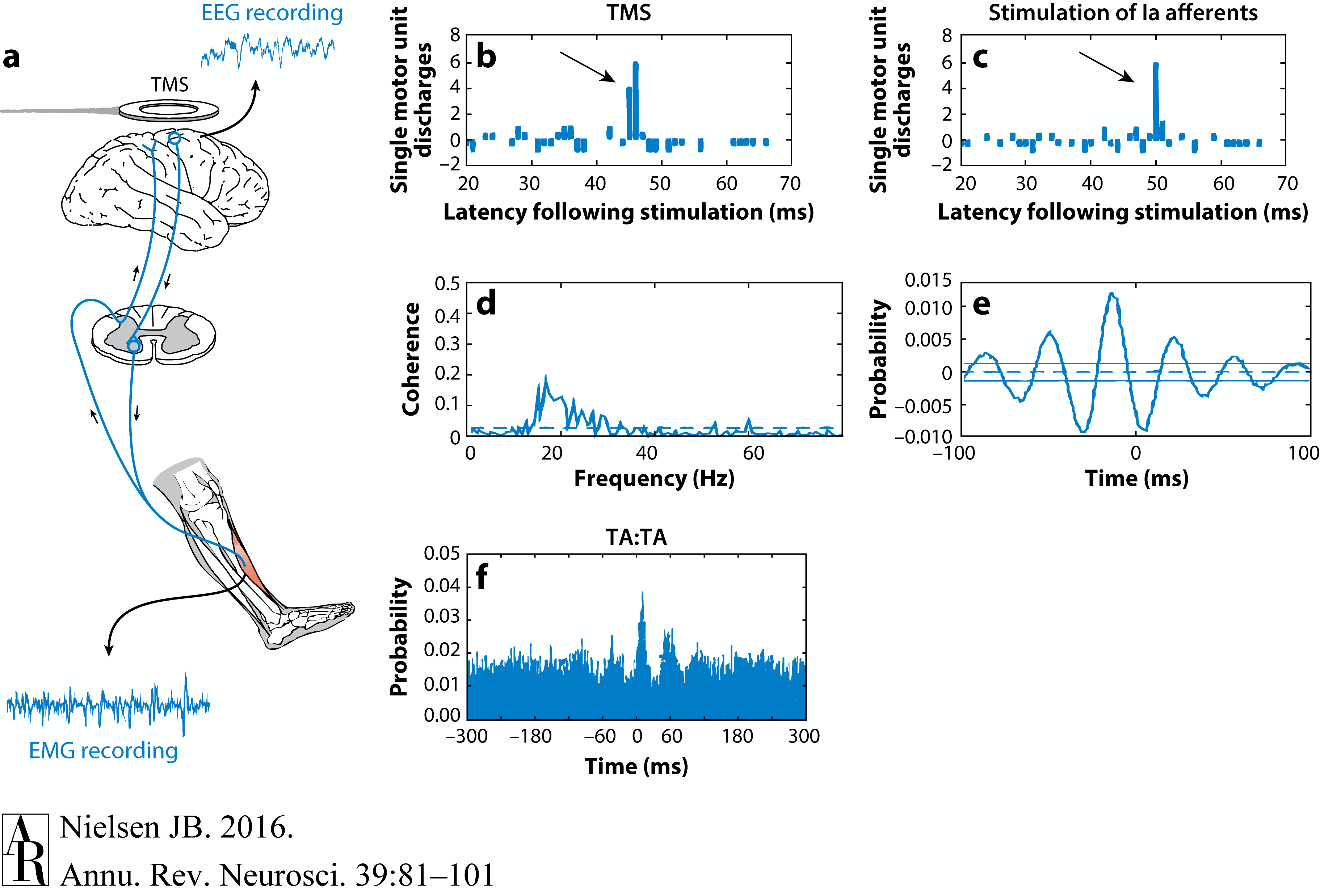
Nielsen (2016) Figure 1

Nielsen (2016) Figure 116

Extrapyramidal system

Neuromechanical17 perspective

  • “Closed loop” control
  • Physical intelligence (pre-flexes)
    • Conduction speed slow
    • Physical/mechanical (e.g., spring-like) properties of muscles, tendons

Kan (n.d.)

Kan (n.d.)

Illustrative motor systems

Behavioral repertoires

  • Looking
  • Locomotion
  • Reaching & grasping
  • Speaking

Approach

  • Computation
  • Algorithm
  • Hardware
  • Physics

Looking

  • Behavioral goals
    • Direct gaze (eyes + head + body) toward goal-relevant targets
    • Direct gaze toward emergent targets
    • Track/pursue targets across observer/target motion
    • Maximize quality of visual information about targets

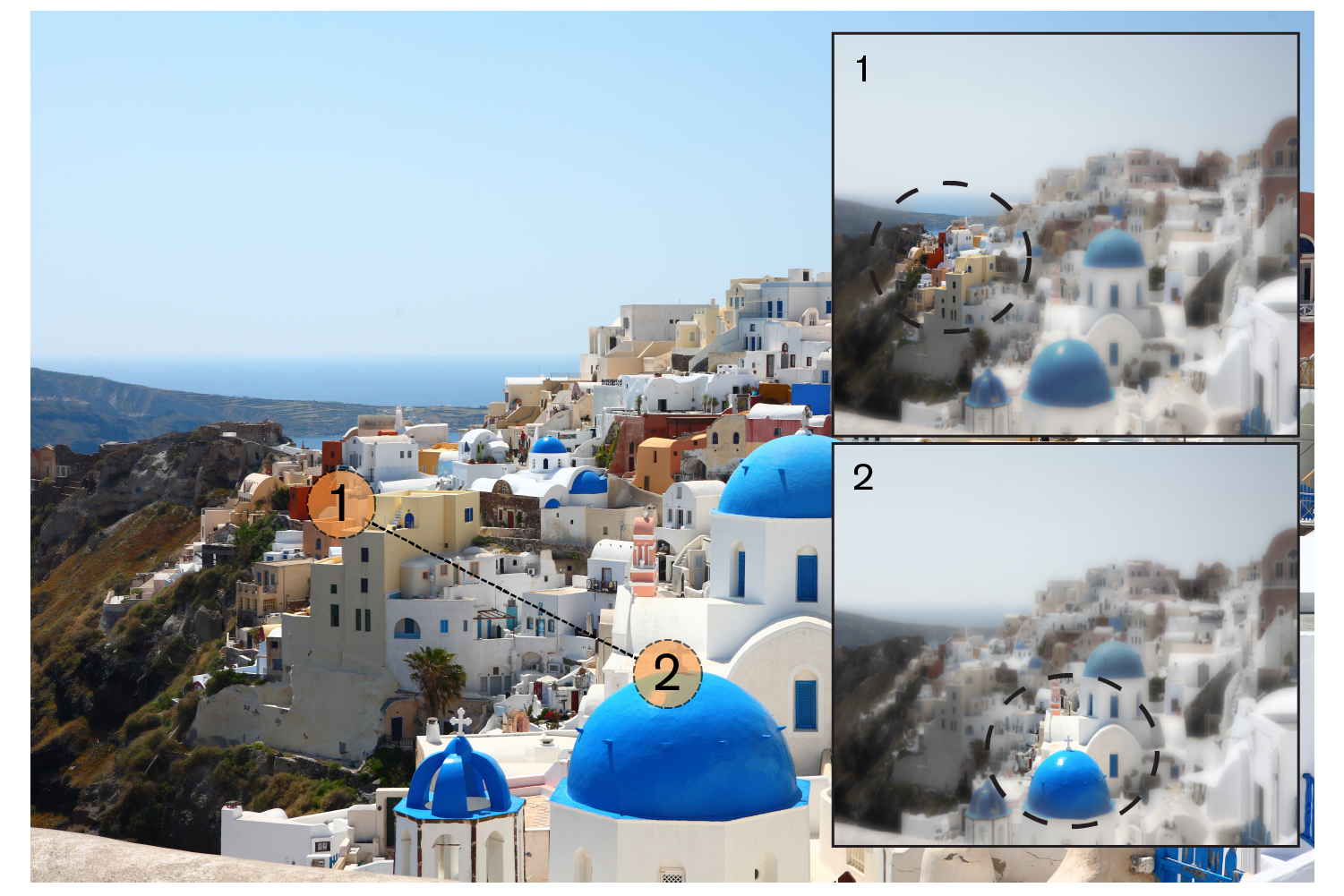
Wikipedia

Wikipedia18

Wikipedia

Wikipedia19

Eye movement types

  • Voluntary
    • Saccades
    • Smooth pursuit
    • Vergence
  • Involuntary
    • Vestibulo-occular reflex (VOR)
    • Optokinetic nystagmus
    • Accommodation

Saccades

  • Rapid, ballistic (no online feedback)
  • ~2-3/s
  • ~200 ms to initiate
  • Amplitudes >20 deg \(\rightarrow\) saccade + head movement

Wikipedia contributors (2025b)

https://www.tobii.com/resource-center/learn-articles/types-of-eye-movements

https://www.tobii.com/resource-center/learn-articles/types-of-eye-movements

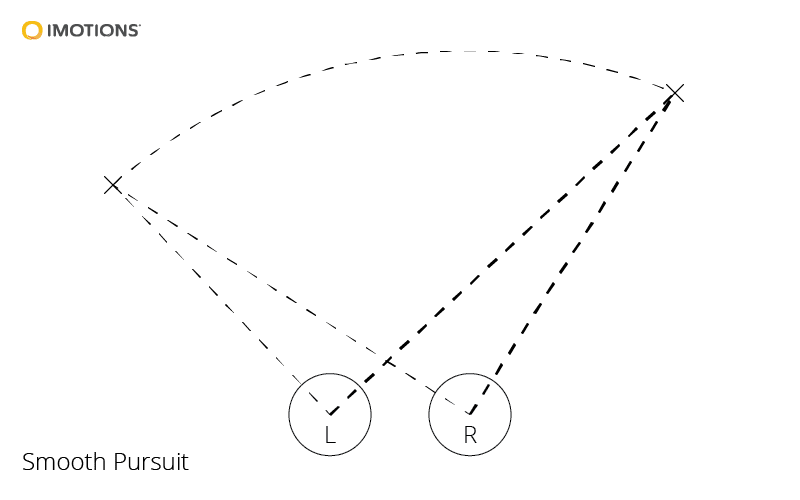
Smooth pursuit

Farnsworth (2019)

Farnsworth (2019)

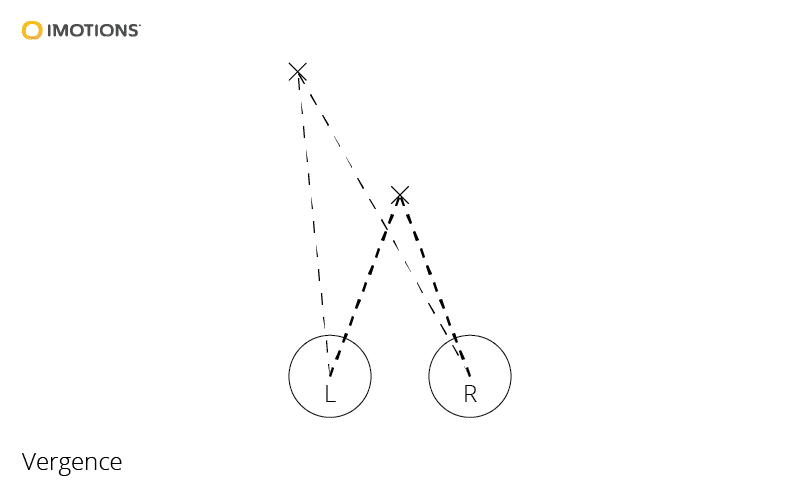
Vergence

  • Eyes move disjointly
  • Fixate on comparable locations
  • Binocular vision \(\rightarrow\) 3D depth
Farnsworth (2019)

Farnsworth (2019)

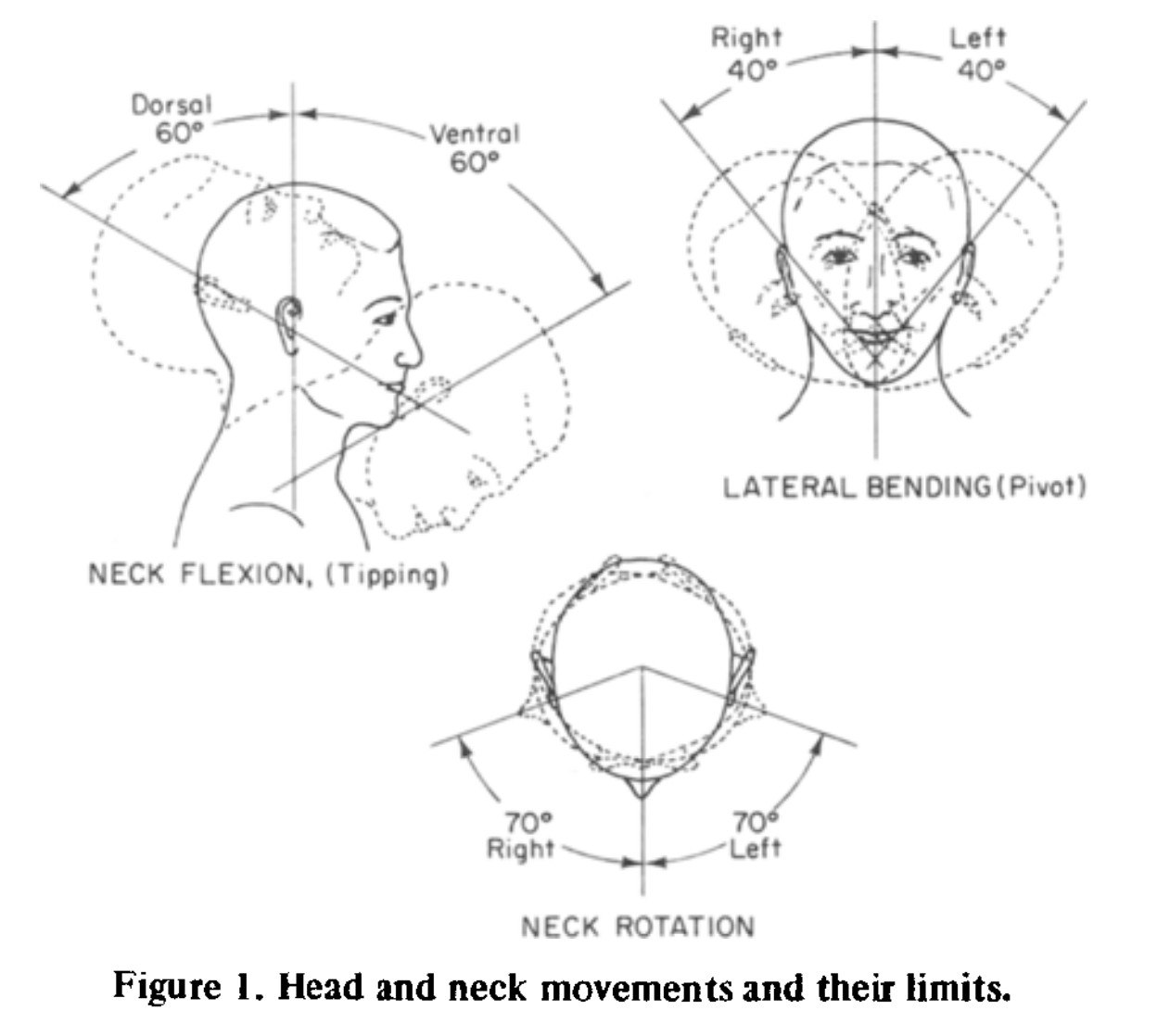
Head movements

AnatomyApp (2024)

Gilman, Dirks, & Hunt (1979) Figure 1

Gilman et al. (1979) Figure 1

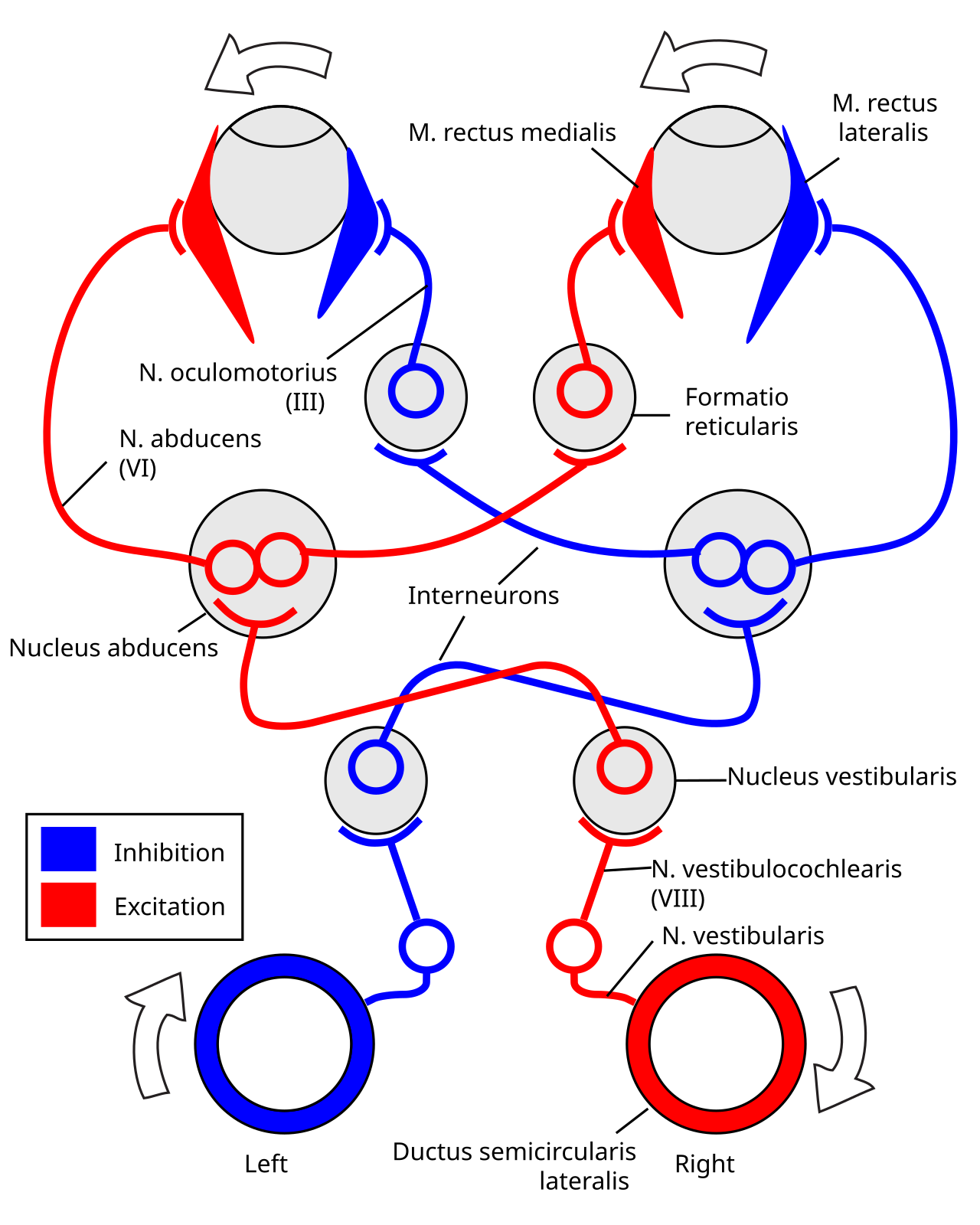
Vestibulo-occular reflex (VOR)

  • Steady eyes when head moves
  • Fast: response < 10 ms
  • Disturbed in vertigo

Wikipedia

Wikipedia20

Optokinetic nystagmus (OKN)

  • Also called optokinetic response
  • Involuntary fast tracking of whole field visual motion, then reset
Figure 5: Stanton (2015)

Wikipedia

Wikipedia21

Pupil constriction/dilation

  • Bright light \(\rightarrow\) constriction
    • Also by parasympathetic activation
  • Dim light \(\rightarrow\) dilation
    • Also by sympathetic activation

Wikipedia

Wikipedia22

Eye muscles

Wikipedia

Wikipedia23

Eye muscles

Dominguez (n.d.)

Dominguez (n.d.)
Nerve Eye Muscle
CN24 III Oculomotor Superior rectus
Inferior rectus
Medial rectus
Inferior oblique
Iris (pupillary) sphincter
CN IV Trochlear Superior oblique
CN VI Abducens Lateral rectus
ANS sympathetic Iris (pupillary) dilator

Inputs to CN III

flowchart TD
  A["Frontal Eye Fields"] -->|"Voluntary saccades"| B(("CN III"))
  C["Superior Colliculus"] -->|"Reflexive saccades"| B
  D["Vestibular (CN VIII) n."] -->|"VOR"|B
  B --> E["Superior rectus"]
  B --> F["Inferior rectus"]
  B --> G["Medial rectus"]
  B --> H["Inferior oblique"]
  I["Parasympathetic NS"] -.-> B
  B -.-> J["Iris (pupillary) sphincter"]
Figure 6: Inputs to CN III.

Considerations

  • (Multi)sensory feedback
    • Move eyes \(\rightarrow\) shift visual field
    • Change vergence or lens thickness \(\rightarrow\) change image focus
    • Eye muscles (probably) have proprioceptors analogous to spindles in skeletal muscles

Considerations

  • Relatively simple physics:
    • Limited influence of gravity, friction
  • Small # of muscles \(\rightarrow\) “model” motor system?
  • DEMO: Illustration of “forward”/generative model/unconscious inference?
    • Predicting future/interpreting current sensory states
  • Converging inputs: voluntary and involuntary control

Locomotion: Goals

  • Keep balance
  • Control speed
  • Steer
    • Toward
    • Away

Physics of balance

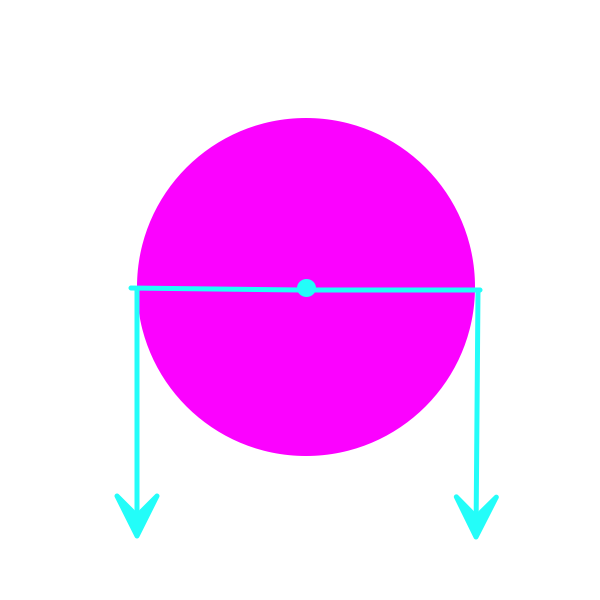
  • Body ~ inverted pendulum
    • Inherently unstable
    • Requires control
Figure 7: Lab. (2022)
  • Keep Center of Mass (COM) within base of support
Figure 8: Motion (2024)

Locomotion: Neuromechanics

Sponberg (2017) Figure 1

Sponberg (2017) Figure 125

Locomotion: Physics

  • Rhythmic/periodic movement of limbs
    • Sequence of left/right leg flexions/extensions
      • arm swing
      • hips/trunk/neck movements

Lu & Lin (2024) Figure 1

Lu & Lin (2024) Figure 126

Locomotion: Physics

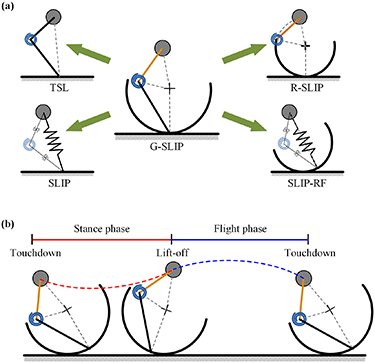
  • Legs, hips can be modeled as generalized spring-loaded inverted pendulum (G-SLIP)
Lu & Lin (2024)

Lu & Lin (2024)

Locomotion: On steering

  • Taxis
    • Directed movement
      • Toward (positive taxis)
      • Away (negative taxis)
  • vs. Kinesis (random movement)
  • Steering a key “breakthrough” in the history of intelligence (Bennett, 2023)

Bennett (2023)

Bennett (2023)

Locomotion: Neural signalling

  • Animals with brain input to the spinal cord can locomote on a treadmill
  • Central pattern generators (CPG) in spinal cord?
Figure 9: YouTube27

Or “rotational” patterns…

Bagnall (2022) Figure 1

Bagnall (2022) Figure 128

Speech: Goals

  • Involuntary vs. voluntary
  • Vocalizations types
    • Linguistic
    • Paralinguistic
      • Pitch, tone, rhythm, tempo, etc.
    • Non-linguistic

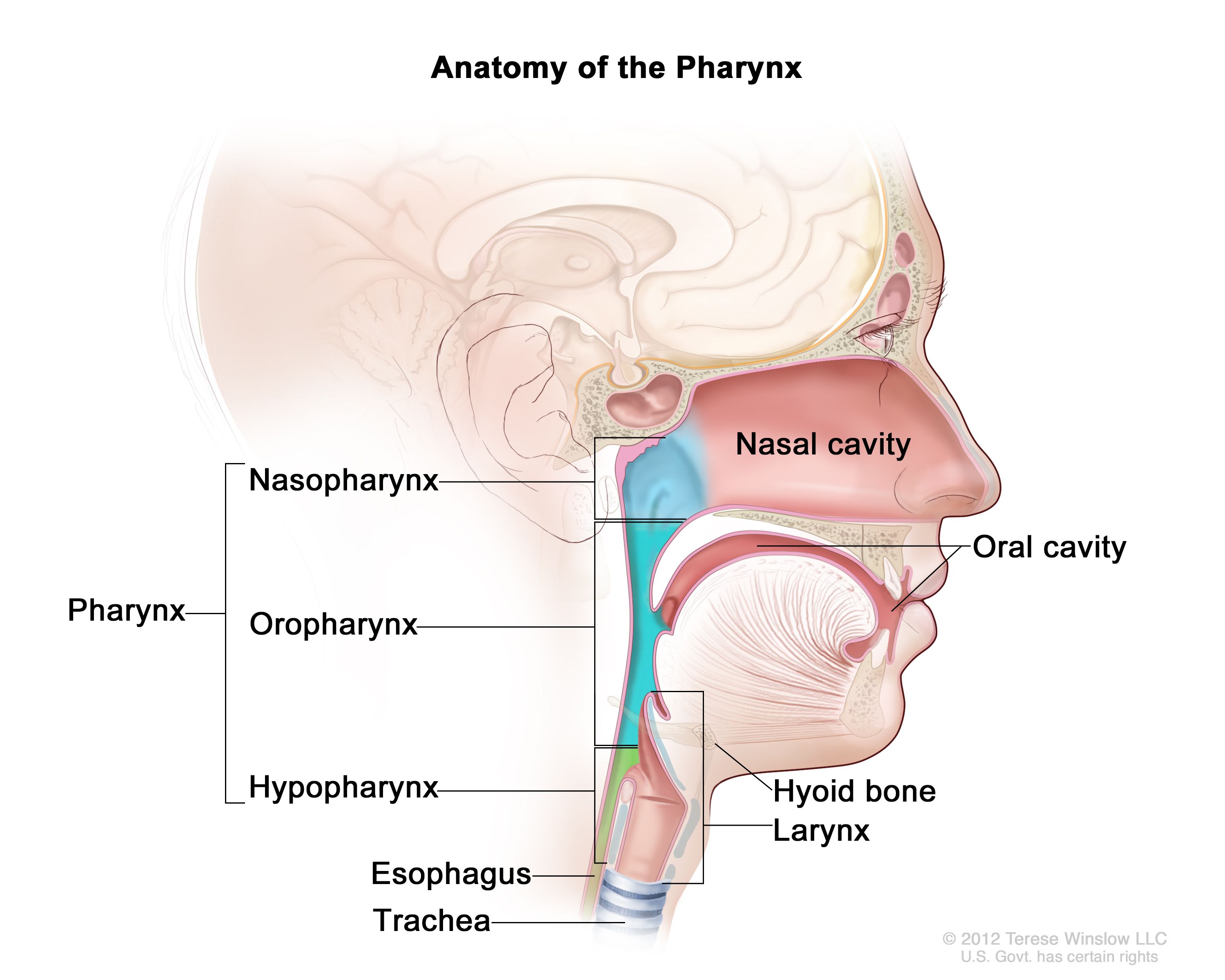
Components

  • Lips, tongue, mouth
  • Pharynx
  • Larynx
  • Lungs

https://www.cancer.gov/publications/dictionaries/cancer-terms/def/pharynx

https://www.cancer.gov/publications/dictionaries/cancer-terms/def/pharynx

https://en.wikipedia.org/wiki/File:Real-time_MRI_-_Speaking_(English).ogv

Wikipedia contributors (2026)

Consonants

  • Place and manner of articulation
  • Voicing
    • “B” vs. “P”
    • “D” vs. “T”
    • “G” vs. “K”
    • “Z” vs. “S”

29

Simonyan, Ackermann, Chang, & Greenlee (2016) Figure 1

Simonyan et al. (2016) Figure 1

flowchart TD
  Z["Motor cortex"] & Y["Periaqueductal gray"] --> A & C & E & G
  A["CN XII Hypoglossal"] --> B["Tongue"]
  C["CN X Vagus"] --> D["Larynx"]
  E["CN VII Facial"] --> F["Lips & face"]
  G["CN IX Glossopharygeal"] --> H["Pharynx"]
Figure 10: Inputs to cranial nerve nuclei involved in speech from cortex and midbrain.

Example

VideoCollectables (2014)

Considerations

  • Hierarchical, parallel control
  • Sensory feedback
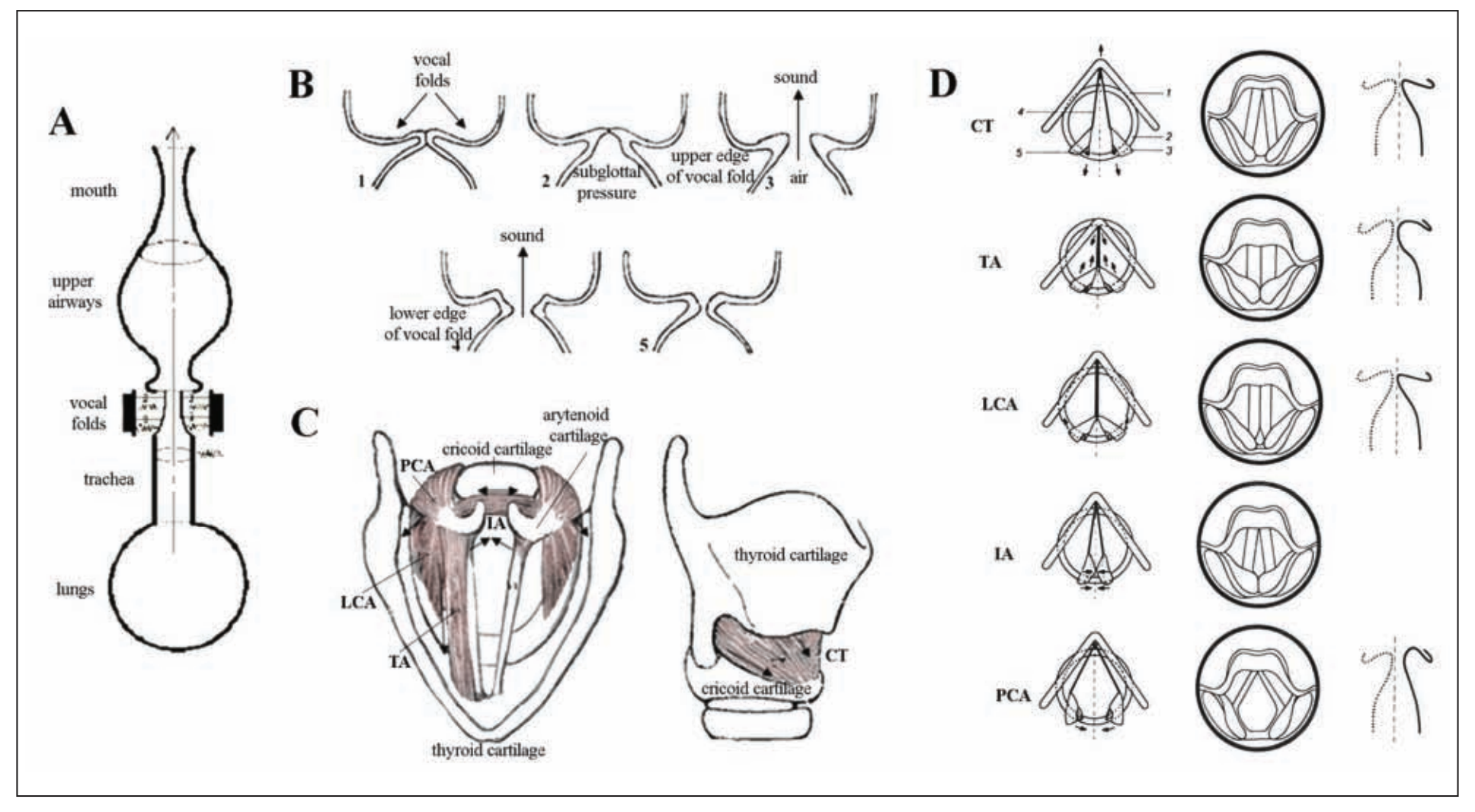
    • Vocal muscle stretch receptors
    • Auditory
  • Vocal muscles like fingers
    • Large area of M1
    • Individuated control over

Simonyan & Horwitz (2011) Figure 1

Simonyan & Horwitz (2011) Figure 130

Simonyan et al. (2016) Figure 2

Simonyan et al. (2016) Figure 2

Simonyan et al. (2016) Figure 531

Illustrative motor systems: Interim summary

  • Many (most?) behaviors involve sequences of
    • looking/orienting + locomotion + reaching/manipulation + vocalization
  • Parallel, coordinated, sequential outputs to multiple motor systems

Interim summary

  • Direct (cerebral) cortical control over muscles of eyes, fingers, vocal apparatus
  • Feedback critical, often multisensory
  • Exploiting physics of body

Wrap-up

Computational perspective

  • Computation
    • Evolution, ethology, psychology
    • Neuromechanics
  • Representation & algorithm
    • Somatotopy
  • Hardware
    • Muscles, tendons, spinal cord, brain

Favela (2020) Figure 3

Favela (2020) Figure 3

The cerebral symphony

By The original uploader was Davigoli at English Wikipedia. - Transferred from en.wikipedia to Commons., https://at.or.at/hans/solitude/, GPLv2, https://commons.wikimedia.org/w/index.php?curid=3939703

By The original uploader was Davigoli at English Wikipedia. - Transferred from en.wikipedia to Commons., https://at.or.at/hans/solitude/, GPLv2, https://commons.wikimedia.org/w/index.php?curid=3939703

Next time

  • Perception

Resources

About

This talk was produced using Quarto, using the RStudio Integrated Development Environment (IDE), version 2026.1.0.392.

The source files are in R and R Markdown, then rendered to HTML using the revealJS framework. The HTML slides are hosted in a GitHub repo and served by GitHub pages: https://psu-psychology.github.io/psy-511-scan-fdns-2026-spring/

References

AnatomyApp. (2024). Biomechanics of the head and neck: circumduction. YouTube. Retrieved from https://youtube.com/shorts/gT_pVkFE7jg?si=YC6IKxlgll_MOQdL
Bagnall, M. W. (2022). Neurons that control walking go round in circles. Nature, 610, 453–454. https://doi.org/10.1038/d41586-022-02238-1
Bennett, M. (2023). A brief history of intelligence. Boston, MA: Mariner Books. Retrieved from https://www.amazon.com/s?k=the+brief+history+of+intelligence&adgrpid=183278970141&hvadid=779538706992&hvdev=c&hvexpln=0&hvlocphy=9006501&hvnetw=g&hvocijid=9807768856047476763--&hvqmt=e&hvrand=9807768856047476763&hvtargid=kwd-2295714306708&hydadcr=3234_13855019_14360&mcid=7d9ad197f9dd322f8395a11e5cec70d4&tag=googhydr-20&ref=pd_sl_1myb05jhoi_e
Braitenberg, V. (2021). Vehicles: Experiments in synthetic psychology. The MIT Press, Massachusetts Institute of Technology. Retrieved from https://mitpress.mit.edu/9780262521123/vehicles/
Cassidy, B. S., & Gutchess, A. H. (2012). Structural variation within the amygdala and ventromedial prefrontal cortex predicts memory for impressions in older adults. Frontiers in Psychology, 3, 319. https://doi.org/10.3389/fpsyg.2012.00319
Dominguez, M. (n.d.). Muscles of eye. Retrieved January 27, 2026, from https://step2.medbullets.com/ophthalmology/120483/muscles-of-eye
Farnsworth, B. (2019, January 8). Eye movements explained: Understanding saccades, smooth pursuits, and fixations. Retrieved January 16, 2026, from https://imotions.com/blog/learning/best-practice/types-of-eye-movements/
Favela, L. H. (2020). Cognitive science as complexity science. Wiley Interdisciplinary Reviews. Cognitive Science, 11(4), e1525. https://doi.org/10.1002/wcs.1525
Fitts, P. M. (1954). The information capacity of the human motor system in controlling the amplitude of movement. Journal of Experimental Psychology, 47, 381–391. https://doi.org/10.1037/h0055392
Gilman, S., Dirks, D. D., & Hunt, S. (1979). Measurement of head movement during auditory localization. Behavior Research Methods, 11, 37–41. https://doi.org/10.3758/BF03205429
Harmen de Weerd. (n.d.). Braitenberg vehicles. Retrieved October 29, 2025, from http://www.harmendeweerd.nl/braitenberg-vehicles/
Kan, P. L. E. van. (n.d.). KINES 531: Neural control of movement. Retrieved from https://wisc.pb.unizin.org/kines531/
Lab., E. C. (2022). Triple inverted pendulum (transition control). YouTube. Retrieved from https://www.youtube.com/watch?v=Rh7JuL3PRSY
Lu, W.-C., & Lin, P.-C. (2024). The generalized spring-loaded inverted pendulum model for analysis of various planar reduced-order models and for optimal robot leg design. Bioinspiration & Biomimetics, 19, 026017. https://doi.org/10.1088/1748-3190/ad2869
Motion, M. A. (2024). Mastering balance: The science of center of gravity and base of support. YouTube. Retrieved from https://www.youtube.com/watch?v=5s1gEi5wfLg&t=11s
Nielsen, J. B. (2016). Human spinal motor control. Annual Review of Neuroscience, 39, 81–101. https://doi.org/10.1146/annurev-neuro-070815-013913
Nishikawa, K., Biewener, A. A., Aerts, P., Ahn, A. N., Chiel, H. J., Daley, M. A., … Szymik, B. (2007). Neuromechanics: An integrative approach for understanding motor control. Integrative and Comparative Biology, 47, 16–54. https://doi.org/10.1093/icb/icm024
Quote origin: “To be is to do” “to do is to be” “do be do be do.” (n.d.). Retrieved January 12, 2026, from https://quoteinvestigator.com/2013/09/16/do-be-do/
Reviews, B. &. T. (2012). I like to move it (original video) madagascar HD. YouTube. Retrieved from https://www.youtube.com/watch?v=hdcTmpvDO0I
Sartori, M., Yavuz, U. Ş., & Farina, D. (2017). In vivo neuromechanics: Decoding causal motor neuron behavior with resulting musculoskeletal function. Scientific Reports, 7, 13465. https://doi.org/10.1038/s41598-017-13766-6
Simonyan, K., Ackermann, H., Chang, E. F., & Greenlee, J. D. (2016). New developments in understanding the complexity of human speech production. The Journal of Neuroscience: The Official Journal of the Society for Neuroscience, 36, 11440–11448. https://doi.org/10.1523/JNEUROSCI.2424-16.2016
Simonyan, K., & Horwitz, B. (2011). Laryngeal motor cortex and control of speech in humans. The Neuroscientist: A Review Journal Bringing Neurobiology, Neurology and Psychiatry, 17, 197–208. https://doi.org/10.1177/1073858410386727
Sponberg, S. (2017). The emergent physics of animal locomotion. https://doi.org/10.1063/PT.3.3691
Stanton, J. (2015). Optokinetic to the right for projection. YouTube. Retrieved from https://www.youtube.com/watch?v=CG5n516PCXM
Totally Science. (2021). Microorganism moving methods - flagella, pseudopodia, and cilia. YouTube. Retrieved from https://www.youtube.com/watch?v=PYKzwpKyUn0
VideoCollectables. (2014). World’s fastest talking man sings michael jackson’s BAD in 20 seconds @VideoScrapbookOfOurTimes. YouTube. Retrieved from https://www.youtube.com/watch?v=4X4Fy8YqysY
Wikipedia contributors. (2025a, August 30). Nerve conduction velocity. Retrieved from https://en.wikipedia.org/wiki/Nerve_conduction_velocity
Wikipedia contributors. (2025b, December 19). Saccade. Retrieved from https://en.wikipedia.org/wiki/Saccade
Wikipedia contributors. (2026, January 11). Articulatory phonetics. Retrieved from https://en.wikipedia.org/wiki/Articulatory_phonetics
Wolpert, D. (2011). Daniel Wolpert: The real reason for brains. YouTube. Retrieved from https://www.youtube.com/watch?v=7s0CpRfyYp8
牛津基礎生物學O. M. B. (2021). Animation 16.3 knee jerk reflex. YouTube. Retrieved from https://www.youtube.com/watch?v=DJLmVSeZ5-c

Footnotes

  1. Linking between the neural and mechanical levels of motor function. Subjects perform a large repertoire of isometric ankle plantar-dorsi flexion contractions. High-density electromyograms are recorded and decomposed into the temporal events at which the underlying motor neurons discharged, thus opening a window into the central nervous system. This is done for seven major muscles spanning the ankle joint (see Methods Section). The decoded motor neuron discharges are directly used to control a subject-specific model of the musculoskeletal system. This enables reconstructing the net ankle moment over time, without knowledge of the experimental values (i.e. blinded validation) and without closed-loop feedback mechanism for compensating prediction errors (i.e. open-loop formulations). In this way, the predicted moment is purely contributed by motor neuron-controlled multi-muscle contractions acting on the skeletal system.

  2. By CFCF - Own work, CC BY-SA 4.0, https://commons.wikimedia.org/w/index.php?curid=37700550

  3. By CFCF - Own work, CC BY-SA 4.0, https://commons.wikimedia.org/w/index.php?curid=37700551

  4. IIA and IIX are subtypes, see https://en.wikipedia.org/wiki/Skeletal_muscle

  5. Remember afferents ascend (i.e, are inputs).

  6. but not instantaneous

  7. https://en.wikipedia.org/wiki/Primary_motor_cortex

  8. Topographic map of the body.

  9. By mailto:ralf@ark.in-berlin.de - File:Homunculus-ja.pngAfter Penfield and Rasmussen (1950), The Cerebral Cortex of Man.Modified from (an earlier version of) File:Homunculus-de.png by Was a bee., CC BY-SA 4.0, https://commons.wikimedia.org/w/index.php?curid=49377875

  10. By I, Paskari, CC BY-SA 3.0, https://commons.wikimedia.org/w/index.php?curid=2344159

  11. By OpenStax College - Anatomy & Physiology, Connexions Web site. http://cnx.org/content/col11496/1.6/, Jun 19, 2013., CC BY 3.0, https://commons.wikimedia.org/w/index.php?curid=30148015

  12. By OpenStax College - Anatomy & Physiology, Connexions Web site. http://cnx.org/content/col11496/1.6/, Jun 19, 2013., CC BY 3.0, https://commons.wikimedia.org/w/index.php?curid=30148015

  13. By BruceBlaus - Own work, CC BY-SA 4.0, https://commons.wikimedia.org/w/index.php?curid=46621399

  14. By Sheryl Tan, Faull L, Curtis A - The Anatomical record, CC BY 4.0, https://commons.wikimedia.org/w/index.php?curid=152594765

  15. By Grant, John Charles Boileau - An atlas of anatomy, / by regions 1962, Public Domain, https://commons.wikimedia.org/w/index.php?curid=30017222

  16. Evidence of corticomotoneuronal connections in human subjects. Indirect, noninvasive evidence of the existence of monosynaptic connections between corticospinal neurons and spinal motoneurons may be obtained in awake human subjects by transcranial magnetic stimulation (TMS) (b,c) and coherence analysis of either cortical [electroencephalogram (EEG)] and muscular activity [electromyogram (EMG)] (d,e) or two separate recordings of muscular activity (f). (b,c) Corticospinal neurons can be excited by a brief magnetic pulse applied by a magnetic coil placed over the appropriate part of the motor cortex in awake human subjects. If the intensity of the magnetic pulse is adjusted appropriately, the evoked descending volley in the corticospinal tract may elicit a subthreshold excitatory postsynaptic potential (EPSP) in the relevant spinal motoneurons. This EPSP may be demonstrated as a change in the discharge probability of a single motor unit recorded from the muscle (b). In the illustrated example, the subject was asked to voluntarily activate the tibialis anterior (TA) muscle, and the discharges of a single motor unit were recorded by a needle electrode inserted into the muscle. TMS elicited a short-lasting (2-ms) increase of discharge probability at a latency of 45 ms (b). The short duration of this peak is consistent with the short rise time of a monosynaptic EPSP. This interpretation is further supported by the observation that stimulation of Ia afferents with known monosynaptic connections to the motoneurons elicits a peak with a similar short duration (c). Data in panels b and c modified with permission from Nielsen & Petersen (1994). (d,e) EEG recorded from the motor cortex and EMG recorded from a voluntarily activated muscle (TA in the illustrated example) show rhythmic modulation of the recorded activity at a frequency of 15–35 Hz. As shown from a coherence analysis of the two signals in panel d, some of this activity is common for the two sites, suggesting a close link between cortical and muscular activity. Panel e shows the EEG and EMG activities are not always synchronous but may show a time lag, which is in the range expected for a fast-conducting direct pathway to the motoneurons. Data in panels d and e modified with permission from Hansen et al. (2002). (f) A monosynaptic origin of corticomuscular coherence is further supported by the observation of short-term synchrony between the discharges of pairs of TA motor units, which may be related to the coherence in the 15–35-Hz frequency band. The subject was asked to voluntarily activate the TA muscle, and the discharges of two different TA motor units were recorded with needle electrodes. The short duration of the central peak of synchronization suggests that the motor unit activities are modulated by a common (monosynaptic) input from collaterals of last-order neurons, which are in all likelihood identical to corticomotoneuronal cells. The secondary peaks at lags of approximately 50–60 ms on either side of the central peak suggest that this last-order input modulates the discharge of the motor units at a frequency of about 20–30 Hz, i.e., corresponding to the coherence observed in the paired EEG-EMG recordings in panels b and c. Data in panel f modified with permission from Nielsen & Kagamihara (1994).

  17. Nishikawa et al. (2007)

  18. By Rhcastilhos. And Jmarchn. - Schematic_diagram_of_the_human_eye_with_English_annotations.svg, CC BY-SA 3.0, https://commons.wikimedia.org/w/index.php?curid=1597930

  19. By Vanessa Ezekowitz - Hand-drawn based on File:AcuityHumanEye.jpg by Hans-Werner Hunziker, CC BY-SA 3.0, https://commons.wikimedia.org/w/index.php?curid=7327065

  20. By .Koen - Own work based on: Simple vestibulo-ocular reflex.PNG and Image:ThreeNeuronArc.png, CC BY-SA 4.0, https://commons.wikimedia.org/w/index.php?curid=4130081

  21. By Student BSMU, CC BY-SA 3.0, https://commons.wikimedia.org/w/index.php?curid=3004633

  22. By Greyson Orlando - Own work, Public Domain, https://commons.wikimedia.org/w/index.php?curid=1451923

  23. By OpenStax College - Anatomy & Physiology, Connexions Web site. http://cnx.org/content/col11496/1.6/, Jun 19, 2013., CC BY 3.0, https://commons.wikimedia.org/w/index.php?curid=30147999

  24. Cranial nerve

  25. Animal movement, as represented by a neuromechanical system diagram. Whether in humans or moths, neurons activate muscles by transmitting electrical impulses over time (t)—frequently digital, all-or-nothing events termed action potentials or spikes. Muscles transform the time-varying neural motor commands u(t) into mechanical forces f(t). Muscles actuate the body, but it is the interaction of the body with the surrounding environment that produces locomotion y(t). Meanwhile, myriad sensors detect not only the body and how it interacts with environment, but also internal states of the animal. All that information feeds back through the animal’s nervous system. Sensor signals can be combined with reference signals, illustrated by red arrows. In this schematic, r1(t) represents a brain-directed task such as “fly at a steady speed,” and r2(t) represents exogenous sensory cues such as a moth might receive when tracking the movement of a flower

  26. Figure 1. The G-SLIP model: (a) its four transformations using model parameter adjustment: SLIP, TSL, SLIP-RF, and R-SLIP model. (b) Running of the G-SLIP model, which is composed of alternating stance phase and flight phase in each stride.

  27. https://www.youtube.com/@mendip89/shorts

  28. Figure 1 | Models of the spinal neuronal circuit that controls locomotion. a, Conventional spinal locomotor models are built from pools of motor and other spinal neurons. Each pool excites one of a pair of muscles — the flexor or extensor muscle — while inhibiting the activity of the other pool. This mutual inhibition means that neuronal activity (indicated for each neuron by vertical lines along a colour-coded timeline) alternates back and forth between the pools, including in the flexor and extensor motor neurons, which drive alternating muscle movements to create steps (or other types of movement). b, Lindén et al.2 propose a different model in which the collective activity of a near-randomly connected pool of neurons covers all of the phases of one bout of movement. Each neuron contributes to this cyclical pattern of activity, with the flexor and extensor motor neurons still alternating as part of the cycle, driving muscle movement.

  29. By created by User:ish shwar (original .png deleted), .svg by Rohieb - sagittal section image based on Minifie et al. (1973:); articulation places are from Catford (1977), CC BY-SA 3.0, https://commons.wikimedia.org/w/index.php?curid=1771968

  30. Figure 1. (A) Schematic view of the vocal and respiratory tracts. Voice originates in the larynx. First, the expiratory airflow from the lungs reaches the larynx through the trachea, where it sets the closed vocal fold tissue into self-excited oscillatations, due to which the larynx becomes the source of voice sound. Further, pressure from the vocal fold oscillations is resonated through the vocal tract and radiated from the mouth as voice. (B) Schematic sequence of events preceding voice production: 1) The vocal folds close immediately prior to voice production; 2) subglottal air pressure builds up below the vocal folds during exhalation; 3) the lower and upper edge of the vocal folds separate subsequently with the release of air and sound generation; 4) the vocal folds reapproximate, starting from their lower edge; and 5) the vocal folds close completely before the next sound production.(C) Superior and lateral views of the human larynx. Intrinsic laryngeal muscles and cartilages. TA = thyroarytenoid muscle; LCA = lateral cricoarytenoid muscle; PCA = posterior cricoarytenoid muscle; IA = interarytenoid muscle; CT = cricothyroid muscle. The arrows show the directions of the muscle contractions. (D) Schematic presentation of the laryngeal muscle function. The left column shows the location of the cartilages and the edge of the vocal folds when each of the laryngeal muscles is active. The arrows indicate the directions of the force exerted: 1) thyroid cartilage, 2) cricoid cartilage, 3) arytenoid cartilages, 4) vocal ligament, and 5) posterior cricoarytenoid ligament. The middle column shows the laryngeal view. The right column shows contours of the frontal section at the middle of the membranous portion of the vocal fold. The dotted line shows a state in which no muscle is activated. Reprinted from Hirano, copyright 1981, with kind permission of Springer Science+Business Media.

  31. Full caption: The cerebral networks supporting primate-general (gray arrows) and human-specific (black) aspects of vocal communication are assumed to be closely intertwined at the level of the basal ganglia. Dashed lines indicate that the basal ganglia motor loop undergoes a dynamic ontogenetic reorganization during spoken language acquisition in that a left-hemisphere cortical storage site of syllable-sized motor programs gradually emerges. Amygdala etc., Amygdala and other structures of the limbic system; ACC, anterior cingulate cortex; SMA, supplementary motor area; GPi, internal segment of globus pallidus; SNr/SNc, substantia nigra, pars reticulata/pars compacta; PAG, periaqueductal gray; vCPG, vocal central pattern generator. Data from Ackermann et al. (2014). B, Gestural architecture of the word “speaking.” Laryngeal activity (bottom line) is a crucial part of the respective movement sequence and must be adjusted to other vocal tract excursions. Articulatory gestures are assorted into syllabic units; gesture bundles pertaining to strong and weak syllables are rhythmically patterned to form metrical feet. Data from Ziegler (2010).