Conceptual development

2025-12-05

Rick Gilmore

Department of Psychology

Prelude

Today’s topics

  • Conceptual development
    • General Readings: Siegler & Alibali (2021) Chapter 8; J. M. Mandler (1992)
    • Student Presentation N: Naive psychology (Presenter: Jiayi Fan : Discussant: Suzy Su)
      • Read: Onishi & Baillargeon (2005); Wellman (2012); Ding, Wellman, Wang, Fu, & Lee (2015)

Conceptual development

Before (beyond?) concepts

To be able to recognize the same thing again as it evidences itself to one’s senses in a multiplicity of ways, thus affording multiple opportunities to accumulate and apply information about it is…the most central challenge there is for cognition.

Millikan (2017)

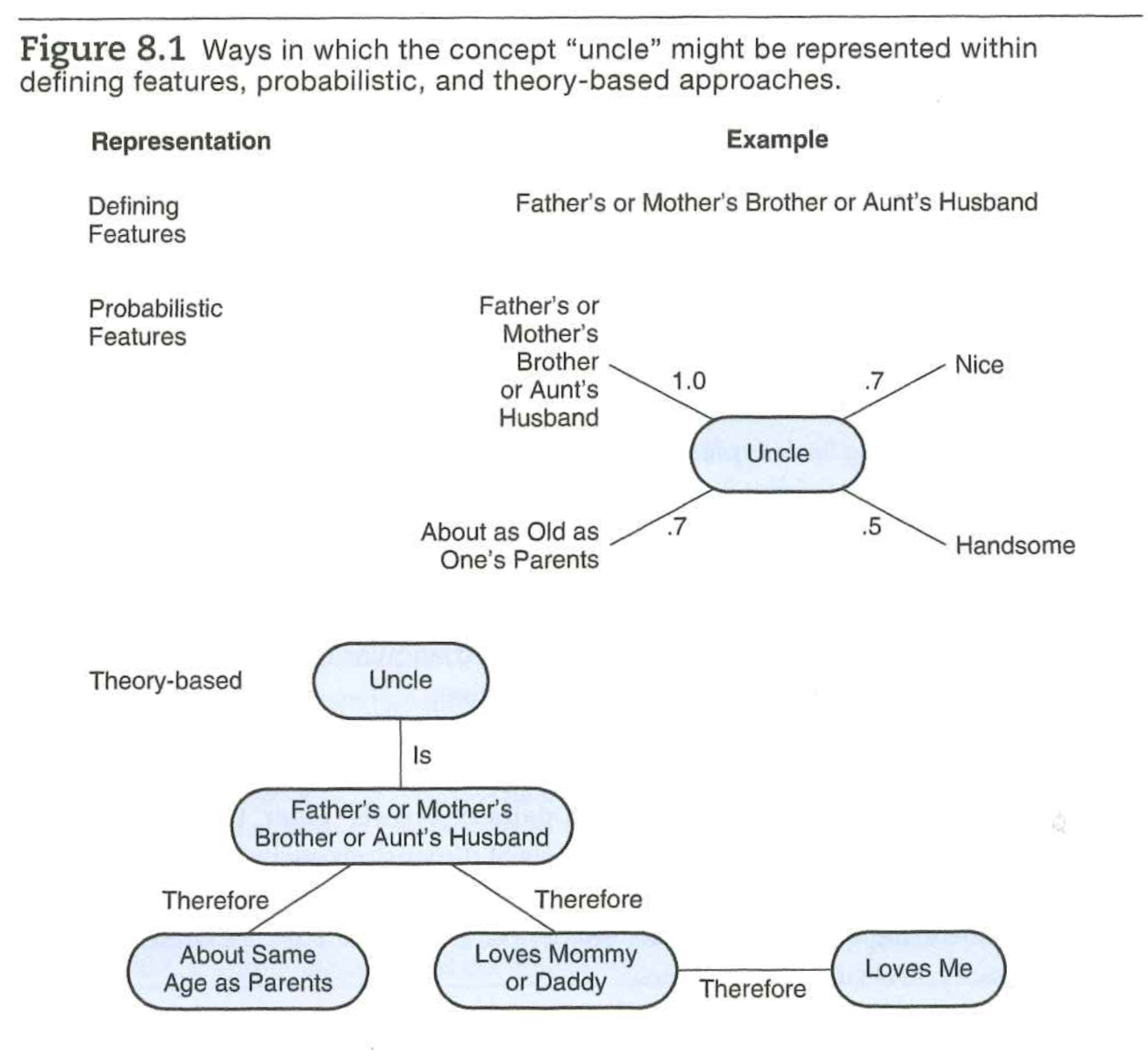
Conceptual representations

  • Defining features
  • Probabilistic
  • Theory-based

Younger \(\neq\) older?

  • Thematic vs. taxonomic grouping depends on task/context

Note

Differences in language comprehension complicate task development and interpretation.

Sources of probabilistic representations

  • Cue validities
    • e.g., P(birds fly) vs. P(non-birds fly)
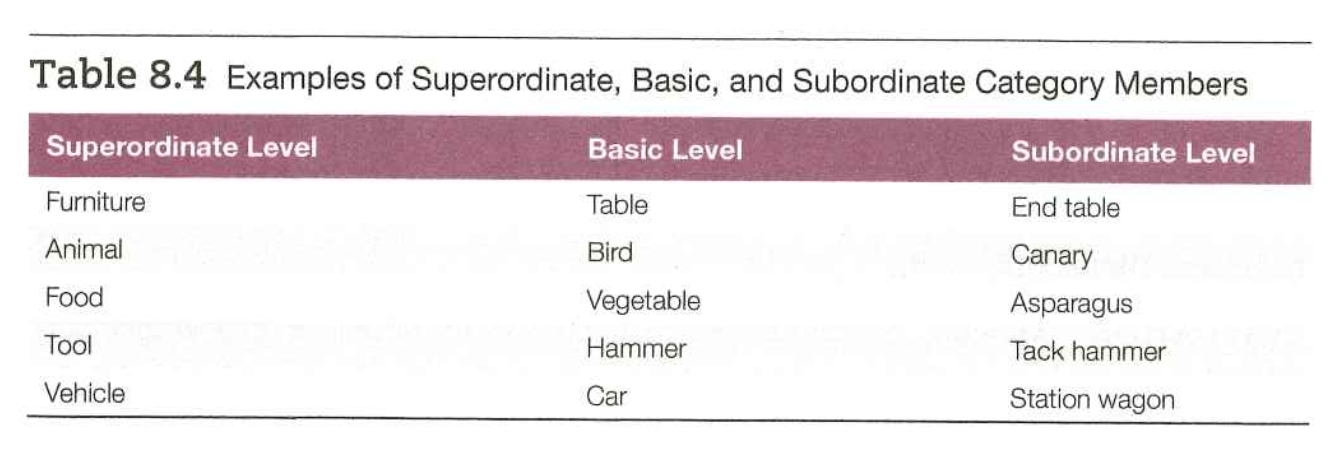
  • Category level

Sources of probabilitic representations

  • Correlations among features
  • Prototypes
  • What are the statistics of children’s experiences?
  • What statistics do children capture from them?

Theory-based representations

  • Concepts as partial theories
    • From what to why
  • Causal relations
    • If \(A\rightarrow B\), then \(t_A < t_B\)
  • Hierarchical relationships

Concepts about what: Core theories

  • (naive) Physics
  • People
    • (naive) Psychology
    • (naive) Sociology

Concepts about what

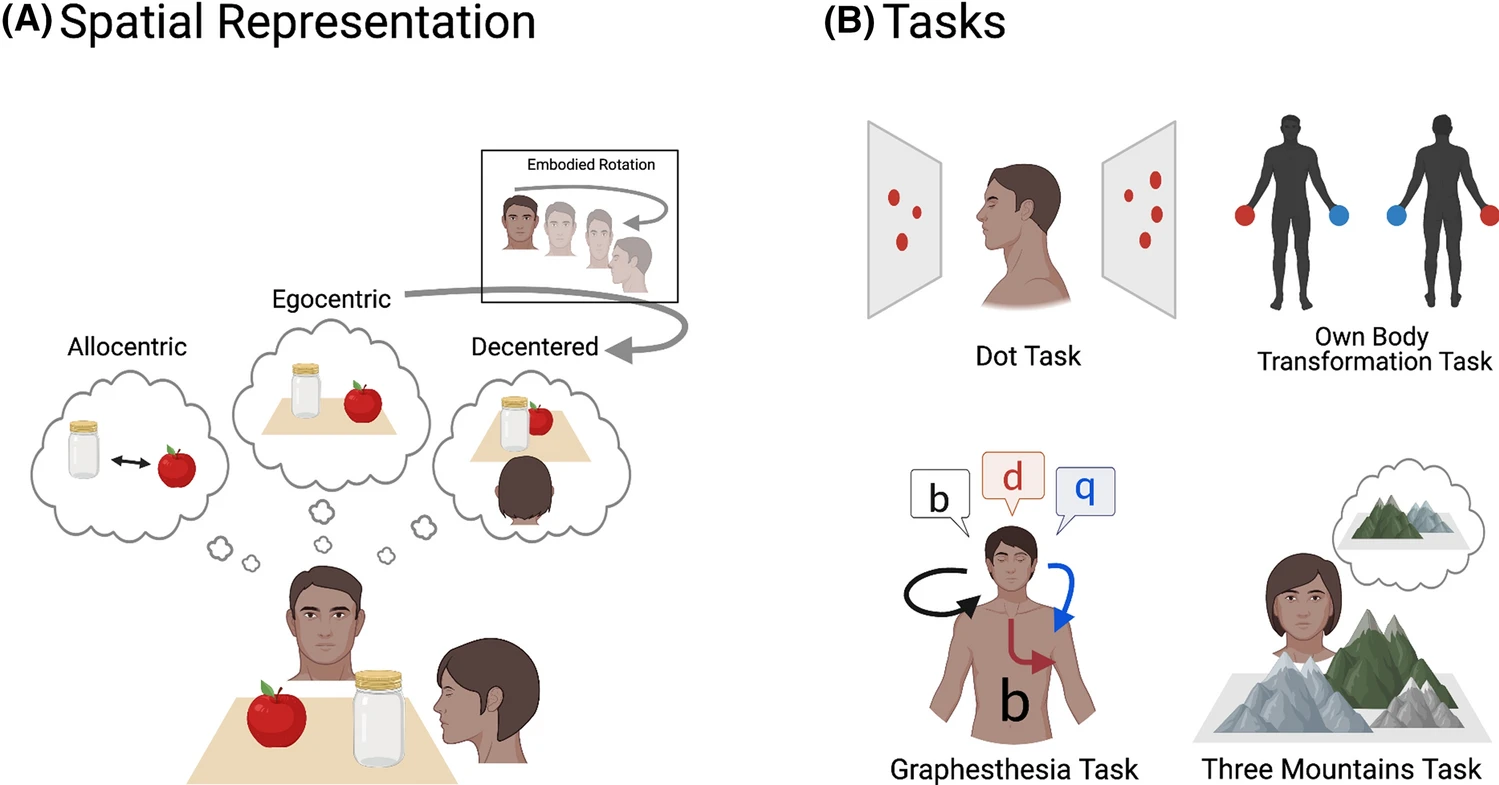
  • Space
    • From ego to allocentrism
  • Time
    • Simultaneity, \(t_1==t_2\), or more often \(t_1=t_2\pm\delta, 0 < \delta < 1\)
    • Sequential relations, \(t_2 > t_1\)
    • Durations

Job, Kirsch, & Auvray (2022) Figure 1

Frith & Vignemont (2005) Figure 1

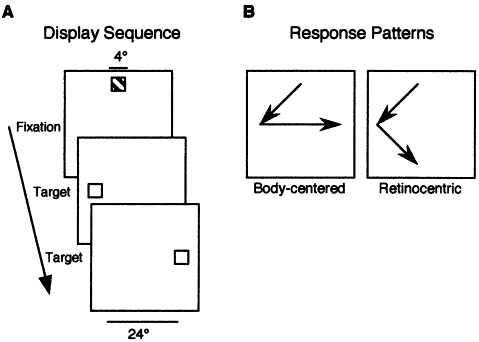
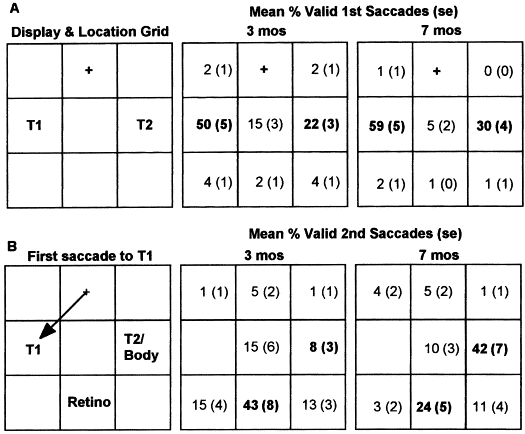
Eye to body-centered saccades

Gilmore & Johnson (1997) Figure 1

Gilmore & Johnson (1997) Figure 2

Regarding simultaneity

Perceiving simultaneity develops

Chen et al. (2016) Figure 1

How to build a baby?

  • Jean Mandler
  • J. Mandler (1988); J. M. Mandler (1992); J. M. Mandler (2005)

How to build a baby

  • Infants engage in perceptual and conceptual categorization
  • Perceptual analysis
    • Recoding perceptual information into a non-perceptual form
  • Image schemas as conceptual primitives
    • Possible grounding for symbolic representation

Illustrations

  • Animacy
    • self-instigated vs. caused
    • contingency of motion

J. M. Mandler (1992)

Contingency

  • Between events/agents

J. M. Mandler (1992)

Caused motion

J. M. Mandler (1992)

Agency

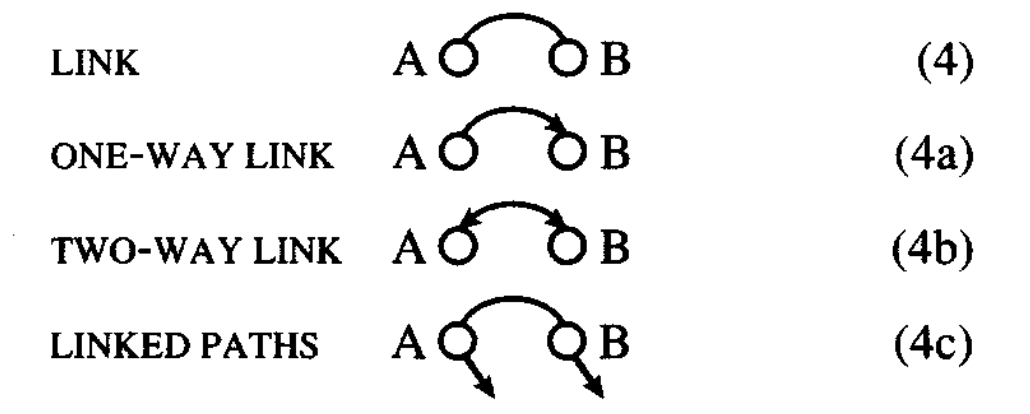
AGENCY is represented as an animate object, A, that moves itself and also causes another object, B, to move

– @J. M. Mandler (1992)

flowchart TD
  A([Entity_A]) ---|is seen in| M[/motion/]
  M ---|looks like| S[/self-motion/]
  M ---|looks| U[/unpredictable/]
  B([Entity_B]) ---|is seen as| N[/not moving/]
  S & U -->|implies| C{{animacy}}
  C -->|is property of| A
Figure 1: From perceptual to conceptual representation. Perceptual properties are in the trapezoids; concepts are in the trapezoidal shapes.
flowchart TD
  A([Entity_A]) ---|makes contact with| B([Entity_B])
  B ---|is seen in| N[/motion/]
  N ---|looks| T[/not to be self-moving/]
  N ---|looks| P[/predictable/]
  T & P -->|implies| D{{inanimacy}}
  D -->|is property of| B
Figure 2: How A moving B affects conceptual representations.
flowchart TD
  A{{animacy}} ---|opposite of| I{{inanimacy}}
  A --- P[/unpredictable motion/]
  A --- Q[/self-motion/]
  I --- R[/predictable motion/]
  I --- S[/caused motion/]
Figure 3: Illustrating relationships between related concepts.
flowchart TD
  A{{animacy}} ---|opposite of| I{{inanimacy}}
  A --- P[/unpredictable motion/]
  A --- Q[/self-motion/]
  A --- S[/symmetric shape/]
  A --- T[/makes noise/]
  A --- U{{is alive}}
  A ---|implies| V{{agency}}
Figure 4: Toward a network of concepts

Naive psychology

Student Presentation N

  • Presenter: Jiayi Fan; Discussant: Suzy Su
    • Read: Onishi & Baillargeon (2005); Wellman (2012); Ding et al. (2015)

Wrap-up

Next time…

  • Systems
    • Read: Bronfenbrenner (1977), Oyama, Griffiths, & Gray (2001), Hartley (2022)

Next time…

  • Student Presentation O: Poverty is bad for cognition. (Presenter: Yeonjin Kim; Discussant: TBD)
    • Read: Taylor, Cooper, Jackson, & Barch (2020); Amso (2020)
  • Student Presentation P: Poverty can be adaptive for cognition. (Presenter: Caesar Liu; Discussant: Natalie Byrd)
    • Read: Frankenhuis, Panchanathan, & Nettle (2016); Frankenhuis, Vries, Bianchi, & Ellis (2020)

Resources

About

This talk was produced using Quarto, using the RStudio Integrated Development Environment (IDE), version Sys.getenv(“RSTUDIO_VER”).

The source files are in R and R Markdown, then rendered to HTML using the revealJS framework. The HTML slides are hosted in a GitHub repo and served by GitHub pages: https://psu-psychology.github.io/psy-548-fall/

References

Amso, D. (2020). Neighborhood poverty and brain development: Adaptation or maturation, fixed or reversible?: Adaptation or maturation, fixed or reversible? JAMA Network Open, 3, e2024139. https://doi.org/10.1001/jamanetworkopen.2020.24139
Bronfenbrenner, U. (1977). Toward an experimental ecology of human development. The American Psychologist, 32, 513–531. https://doi.org/10.1037/0003-066x.32.7.513
Chen, Y.-C., Shore, D. I., Lewis, T. L., & Maurer, D. (2016). The development of the perception of audiovisual simultaneity. Journal of Experimental Child Psychology, 146, 17–33. https://doi.org/10.1016/j.jecp.2016.01.010
Ding, X. P., Wellman, H. M., Wang, Y., Fu, G., & Lee, K. (2015). Theory-of-mind training causes honest young children to lie. Psychological Science, 26, 1812–1821. https://doi.org/10.1177/0956797615604628
Frankenhuis, W. E., Panchanathan, K., & Nettle, D. (2016). Cognition in harsh and unpredictable environments. Current Opinion in Psychology, 7, 76–80. https://doi.org/10.1016/j.copsyc.2015.08.011
Frankenhuis, W. E., Vries, S. A. de, Bianchi, J., & Ellis, B. J. (2020). Hidden talents in harsh conditions? A preregistered study of memory and reasoning about social dominance. Developmental Science, 23, e12835. https://doi.org/10.1111/desc.12835
Frith, U., & Vignemont, F. de. (2005). Egocentrism, allocentrism, and asperger syndrome. Consciousness and Cognition, 14, 719–738. https://doi.org/10.1016/j.concog.2005.04.006
Gilmore, R. O., & Johnson, M. H. (1997). Body-centered representations for visually-guided action emerge during early infancy. Cognition, 65, B1–B9. https://doi.org/10.1016/S0010-0277(97)00038-3
Hartley, C. A. (2022). How do natural environments shape adaptive cognition across the lifespan? Trends in Cognitive Sciences, 26, 1029–1030. https://doi.org/10.1016/j.tics.2022.10.002
Job, X. E., Kirsch, L. P., & Auvray, M. (2022). Spatial perspective-taking: Insights from sensory impairments. Experimental Brain Research, 240, 27–37. https://doi.org/10.1007/s00221-021-06221-6
Mandler, J. (1988). How to build a baby: On the development of an accessible representational system☆. Cognitive Development, 3, 113–136. https://doi.org/10.1016/0885-2014(88)90015-9
Mandler, J. M. (1992). How to build a baby: II. Conceptual primitives. Psychological Review, 99, 587–604. https://doi.org/10.1037/0033-295x.99.4.587
Mandler, J. M. (2005). How to build a baby: III. Image schemas and the transition to verbal thought. From Perception to Meaning: Image Schemas in Cognitive Linguistics, 137–163. Retrieved from https://www.academia.edu/download/30476938/from_perception_to_meaning_image_schemas_in_cognitive_linguistics.pdf#page=150
Millikan, R. G. (2017). Beyond concepts: Unicepts, language, and natural information. London, England: Oxford University Press. https://doi.org/10.1093/oso/9780198717195.001.0001
Onishi, K. H., & Baillargeon, R. (2005). Do 15-month-old infants understand false beliefs? Science (New York, N.Y.), 308, 255–258. https://doi.org/10.1126/science.1107621
Oyama, S., Griffiths, P. E., & Gray, R. D. (2001). Cycles of contingency: Developmental systems and evolution. Xii, 377. Retrieved from https://psycnet.apa.org/record/2001-06709-000
Siegler, R., & Alibali, M. (2021). Children’s Thinking (5th ed.). Pearson.
Taylor, R. L., Cooper, S. R., Jackson, J. J., & Barch, D. M. (2020). Assessment of neighborhood poverty, cognitive function, and prefrontal and hippocampal volumes in children. JAMA Network Open, 3, e2023774. https://doi.org/10.1001/jamanetworkopen.2020.23774
Wellman, H. M. (2012). Theory of mind: Better methods, clearer findings, more development. The European Journal of Developmental Psychology, 9, 313–330. https://doi.org/10.1080/17405629.2012.680297