Asinof, S. K., & Card, G. M. (2024). Neural control of naturalistic behavior choices.
Annual Review of Neuroscience,
47, 369–388.
https://doi.org/10.1146/annurev-neuro-111020-094019
Calabrese, R. L. (2018). Inconvenient truth to principle of neuroscience.
Trends in Neurosciences,
41(8), 488–491.
https://doi.org/10.1016/j.tins.2018.05.006
Cisek, P. (2019). Resynthesizing behavior through phylogenetic refinement.
Attention, Perception & Psychophysics.
https://doi.org/10.3758/s13414-019-01760-1
Eisenberg, I. W., Bissett, P. G., Zeynep Enkavi, A., Li, J., MacKinnon, D. P., Marsch, L. A., & Poldrack, R. A. (2019). Uncovering the structure of self-regulation through data-driven ontology discovery.
Nature Communications,
10(1), 2319.
https://doi.org/10.1038/s41467-019-10301-1
Favela, L. H. (2020). Cognitive science as complexity science.
Wiley Interdisciplinary Reviews. Cognitive Science,
11(4), e1525.
https://doi.org/10.1002/wcs.1525
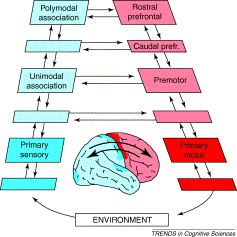
Fuster, J. M. (2004). Upper processing stages of the perception-action cycle.
Trends in Cognitive Sciences,
8, 143–145.
https://doi.org/10.1016/j.tics.2004.02.004
Hill, A. B. (2015). The environment and disease: Association or causation? 1965.
Journal of the Royal Society of Medicine,
108(1), 32–37.
https://doi.org/10.1177/0141076814562718
Kahneman, D. (2013).
Thinking, fast and slow (1st edition). Farrar, Straus; Giroux. Retrieved from
https://www.amazon.com/Thinking-Fast-Slow-Daniel-Kahneman/dp/0374533555
Krakauer, J. W., Ghazanfar, A. A., Gomez-Marin, A., MacIver, M. A., & Poeppel, D. (2017). Neuroscience needs behavior: Correcting a reductionist bias.
Neuron,
93(3), 480–490.
https://doi.org/10.1016/j.neuron.2016.12.041
Levitis, D. A., Lidicker, W. Z., & Freund, G. (2009). Behavioural biologists don’t agree on what constitutes behaviour.
Animal Behaviour,
78(1), 103–110.
https://doi.org/10.1016/j.anbehav.2009.03.018
Marr, D. (1980).
Vision. Retrieved from
https://mitpress.mit.edu/books/vision
melodysheep. (2011, March). Ode to the brain! By symphony of science. Youtube. Retrieved from
https://www.youtube.com/watch?v=JB7jSFeVz1U
National Geographic. (2014, January). Beautiful
3-D brain scans show every synapse | national geographic. You
Tube. Retrieved from
https://www.youtube.com/watch?v=nvXuq9jRWKE
Parada, F. J., & Rossi, A. (2018). If neuroscience needs behavior, what does psychology need?
Frontiers in Psychology,
9, 433.
https://doi.org/10.3389/fpsyg.2018.00433
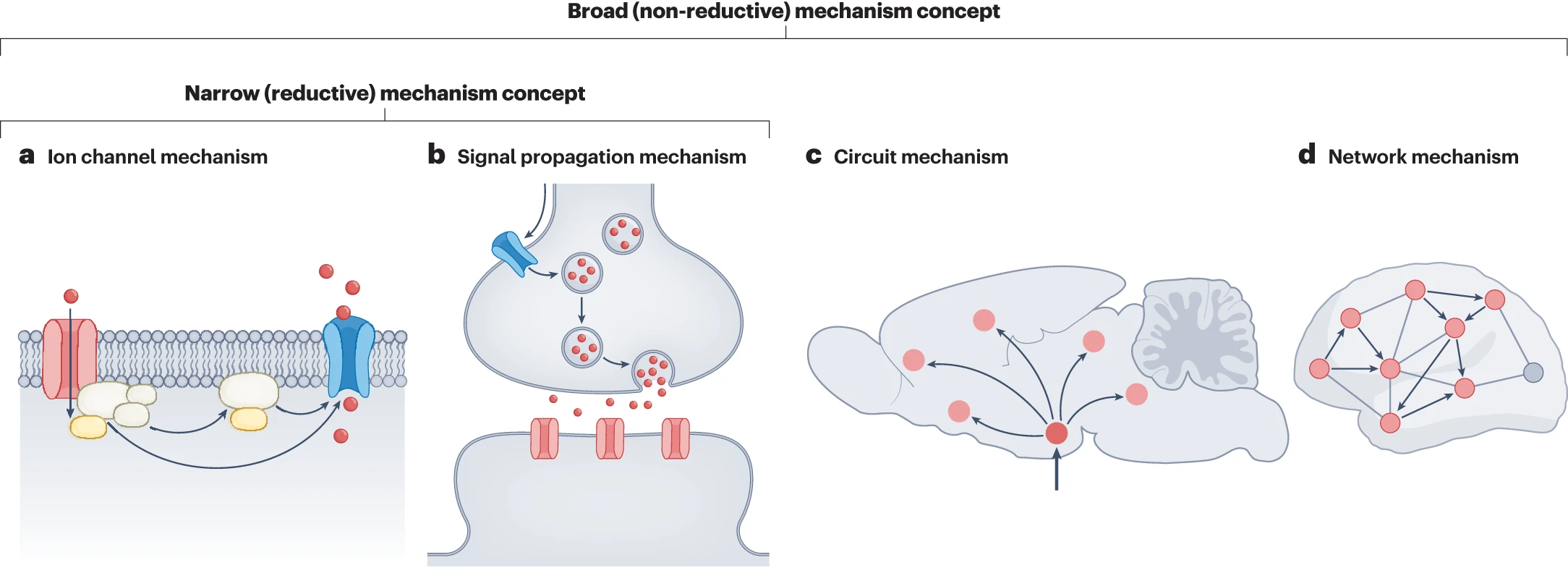
Ross, L. N., & Bassett, D. S. (2024). Causation in neuroscience: Keeping mechanism meaningful.
Nature Reviews. Neuroscience.
https://doi.org/10.1038/s41583-023-00778-7
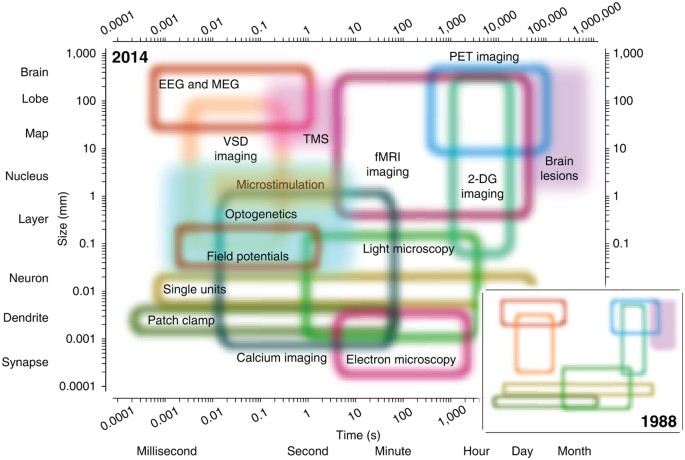
Sejnowski, T. J., Churchland, P. S., & Movshon, J. A. (2014). Putting big data to good use in neuroscience.
Nat. Neurosci.,
17(11), 1440–1441.
https://doi.org/10.1038/nn.3839
Siddiqi, S. H., Kording, K. P., Parvizi, J., & Fox, M. D. (2022). Causal mapping of human brain function.
Nature Reviews Neuroscience,
23(6), 361–375.
https://doi.org/10.1038/s41583-022-00583-8
Stringer, C., Pachitariu, M., Steinmetz, N., Reddy, C. B., Carandini, M., & Harris, K. D. (2019). Spontaneous behaviors drive multidimensional, brainwide activity.
Science,
364(6437), 255.
https://doi.org/10.1126/science.aav7893
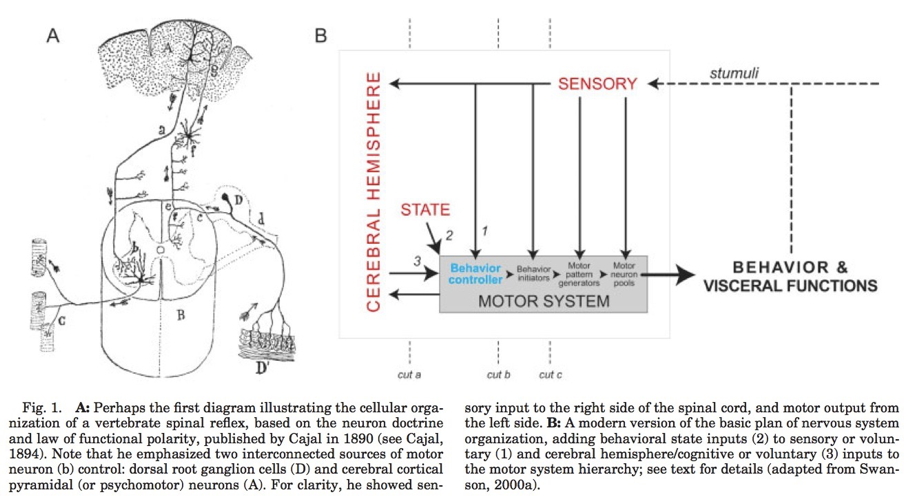
Swanson, L. W. (2005). Anatomy of the soul as reflected in the cerebral hemispheres: Neural circuits underlying voluntary control of basic motivated behaviors.
Journal of Comparative Neurology,
493(1), 122–131.
https://doi.org/10.1002/cne.20733
Terman, D., & Izhikevich, E. (2008). State space.
Scholarpedia Journal,
3, 1924.
https://doi.org/10.4249/scholarpedia.1924